News
NAAIP Maiden Symposium: Okebukola, Others Navigate Implementation Gaps In Nigeria’s National AI Strategy


Abuja, Nigeria
The National Association of AI Practitioners (NAAIP), an influential body dedicated to propelling Nigeria’s technological future, successfully inaugurated its bi-monthly symposium series on Thursday, November 27, 2025, with a high-level virtual discourse.
The maiden event, titled “Beyond the Blueprint: Navigating the Implementation Gaps in Nigeria’s National AI Strategy (NAIS),” moved decisively beyond the policy declaration of the NAIS, which is championed by the Ministry of Communication, Innovation and Digital Economy, to scrutinize the critical operational challenges impeding its success.
The symposium’s core mission was to evaluate progress, identify constraints, and synthesize actionable, evidence-based solutions that would ensure the NAIS translates into tangible, equitable, and sustainable national development.
The Call to Action and Core Constraints
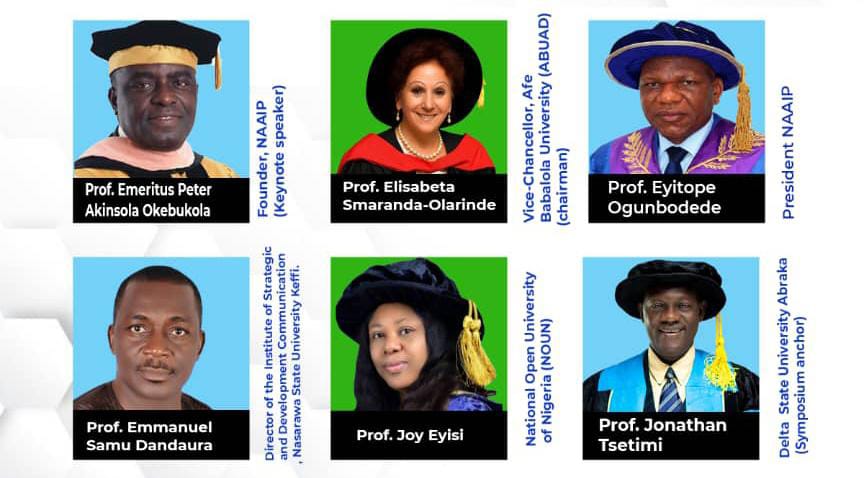
The event, which ran from 5:00 PM to 6:15 PM, was officially called to order by NAAIP President, Professor Eyitope Ogunbodede, following the welcoming of guests by General Secretary of NAAIP, Dr. Kehinde Abiola. The discourse was expertly anchored by Professor Jonathan Tsetimi, while Professor Elizabeta Smaranda Olarinde, the VC of Afe Babalola university, who was the chairman of the occasion, delivered the Chairman’s Opening Address, effectively setting the tone for the robust intellectual exchange.
The central thesis was established in the keynote address by the Founder of NAAIP, Emeritus Professor Peter Akinsola Okebukola. In his presentation, “The Policy-to-Practice Pipeline,” Professor Okebukola assessed the institutional framework for NAIS implementation. His analysis crystallized the core barriers to execution into the PCP formula: Power, Connectivity, and People. He issued a decisive warning that despite possessing a solid AI strategy, Nigeria risks becoming an AI consumer, not a creator, unless these three foundational implementation gaps are urgently fixed to provide the necessary the enabling environment for the implementation of Nigeria’s National AI Strategy.
ALSO READ: Why Warri Port Matters
Critical Analysis of the Implementation Gaps
The symposium deepened its focus through two critical sectoral presentations that provided granular detail on the constraints facing the NAIS:
- Infrastructure, Talent Ecosystem, and Skills Gap
Professor Emmanuel Samu Danduara addressed the hardware and human capital deficits, painting a stark picture of the current infrastructural reality. He highlighted that unstable power supply, patchy fibre-optic networks, and a severe lack of dedicated data centre investment—noting the critically insufficient number of operational or intended centres—compromise the necessary high-compute environment for AI research and deployment. On the human capital front, the situation is equally challenging as less than 5% of graduates are exposed to Machine Learning (ML) basics, since most universities in Nigeria lack High-Performance Computing (HPC) labs, and the absence of Polytechnics in the AI pipeline exacerbates the problem. This has created a critical “missing middle” in the workforce—a shortage of essential professionals such as data technicians, cloud engineers, AI product integrators, and dataset developers, leading him to conclude that “Nigeria has too many theorists, not enough builders.”
- Localization and Data Sovereignty:
Professor Joy Eyisi delivered a compelling argument that technical advancement must be rooted in national context in her presentation, “Developing Indigenous LLMs and Ensuring Data Sovereignty.” She asserted that “no nation can innovate sustainably on borrowed identity” and framed the push for Indigenous Large Language Models (LLMs) and control over data as fundamental questions of national identity, economic survival, and cultural preservation. With over 500 languages, Nigeria risks having its expressions mistranslated and cultural references lost if AI systems are trained only on foreign datasets. Professor Eyisi projected a future where AI could unlock extraordinary potential in key sectors like Agriculture, Healthcare, and Education by seamlessly operating in local languages like Fulfulde and Igbo. She underscored that data sovereignty is a strategic necessity, emphasizing that data, unlike crude oil, does not return unaltered once exported; therefore, Nigeria must own both the “digital farm and the algorithmic barn” to prevent loss of competitive advantage and research independence.
Actionable Solutions and NAAIP’s Forward Role
The subsequent Moderated Q&A and Panel Discussion, facilitated by Professor Tsetimi, synthesized the expert recommendations into concrete, actionable steps aimed at bridging the policy-to-practice gap:
- To address Infrastructure, the experts called for AI infrastructure to be immediately declared “Critical National Infrastructure.” This declaration should be paired with the creation of a National AI Infrastructure Fund to finance the building of at least six Zonal AI Compute Hubs across the country.
- To fix the Talent Pipeline, the need to adopt a National AI Skills Framework and introduce AI literacy in schools and tertiary education was emphasized. Furthermore, the establishment of AI Innovation Fellowships and the enforcement of Industry Co-Teaching in universities were proposed to build a robust pipeline from basic literacy to advanced research.
- To close the Skills Gap, the symposium recommended building a National Data Labelling Workforce, offering tax incentives for companies that train Nigerians, and establishing a Responsible AI Academy to develop professionals in ethics, audit, and governance.
In the final segment, the NAAIP formally affirmed its commitment to driving these solutions by influencing national policy and leading the training initiatives. The event concluded with the Vote of Thanks delivered by Professor Nkechinyere Nwokoye, followed by the Symposium Conclusion led by the NAAIP President, Professor Eyitope Ogunbodede, who reinforced the urgent need for execution. The President’s final declaration resonated with the consensus of the symposium: “Blueprints don’t build nations. Execution does.” The collective commitment was that by prioritizing power, fibre, and talent, Nigeria is poised not just to join the AI revolution, but to help shape it globally.


At 56, Festus Keyamo Exemplifies Courageous Service To Nigeria — Dafinone

Aniagwu Urges Eligible Deltans To Embrace Voter Registration, Advocates Easier CVR Process

Is Iran’s Second Liberation Afoot?

Dafinone Partners Scholara To Expand Access To Technology-Driven Learning For Students In Delta Central

Oborevwori Felicitates Akpowowo At 53

Oborevwori’s Achievements Have Put His Distractors To Shame – Erute

Rights Activist Sends Message To Gov Oborevwori Over Cult Killings In Delta, Makes Recommendations

Azemhe Azena Resigns From Omega Fire Ministry After 18 Years Of Service

DTSG Directs Primary, Secondary Schools To Resume Monday, January 5

Cuffs Snapped, Justice Mocked, As ₦800M Land Scam Kingpin Bolts From Police Custody In Broad Daylight

UBA Dragged To Court For Allegedly Opening Secret Account That Landed Customer In EFCC Net

Awhefeada Set To Light Up DELSU January 15

Oborevwori Unveils Ambitious N1.729 Trillion Delta 2026 Budget: A Renewed Commitment To Accelerating The MORE Agenda

Onwa D’zemba 2025: Football Fever Grips Awka On December 29!


-
 News19 hours ago
Oborevwori’s Achievements Have Put His Distractors To Shame – Erute
-
News13 hours ago
Oborevwori Felicitates Akpowowo At 53
-
Education13 hours ago
Dafinone Partners Scholara To Expand Access To Technology-Driven Learning For Students In Delta Central
-
Column2 hours ago
Is Iran’s Second Liberation Afoot?
-
News1 hour ago
At 56, Festus Keyamo Exemplifies Courageous Service To Nigeria — Dafinone