News
Rejoinder To Mr. Oritsegbubemi A. Edema’s Statement On The Urhobo Renaissance Society’s Appeal For Peace In Warri


The recent statement by Mr. Oritsegbubemi A. Edema, written as a response to the Urhobo Renaissance Society’s (URS) appeal for peace in Warri, deserves a measured and factual rejoinder. While his expressed concern for peace is appreciated, his attempt to anchor lasting peace on colonial-era court judgments that purportedly confer exclusive “ownership” and “overlordship” of Warri lands to the Itsekiri people is both legally outdated and socially impractical.
Peace in Warri cannot be built on one group’s claim to perpetual supremacy. It can only emerge from mutual recognition of equality and shared ownership among the three historic peoples of the Warri area — the Urhobos, the Ijaws, and the Itsekiris — whose distinct kingdoms and communities are today recognized by government and protected by law.
The Urhobo Renaissance Society (URS), in its appeal, simply called for dialogue among the Olu of Warri, HM Ogiame Atuwatse III, CFR; the Orosuen of Okere-Urhobo Kingdom, HRM Owhotemu II; the Ovie of Agbarha-Warri Kingdom, HRM Igbi II; and the Amakosu of Ogbe-Ijoh, HRM Monbene III; under the mediation of the Orodje of Okpe, HRM Orhue I.
This inclusive call reflects a genuine desire for reconciliation and progress among equals, not subordinates.
However, Mr. Edema’s insistence that peace must be conditioned on universal acceptance of old judgments declaring Itsekiri overlordship over Warri lands contradicts the spirit of this peace initiative. It ignores the evolution of Nigeria’s legal framework and the contemporary administrative reality in which all three ethnic nationalities enjoy official recognition, defined territories, and traditional leadership structures.
The colonial and early post-independence cases often cited by Itsekiri advocates — such as Ometan v. Chief Dore Numa (1926), Essi v. Itsekiri Communal Land Trustees (1960), and Itsekiri Communal Land Trustees v. Warri Divisional Planning Authority (1973) — must be viewed within their limited historical and legal context. These decisions were issued under a colonial system that imposed indirect rule through selected intermediaries and distorted native land tenure practices.
ALSO READ: 32 Transformers To Power The Ark – Bishop Oyedepo Reveals
Moreover, the judgments dealt with specific parcels of land and limited parties, not the entire Warri territory or its diverse peoples. It is therefore incorrect, in law or logic, to extrapolate those rulings as blanket confirmation of Itsekiri ownership of all Warri lands. The courts of that era operated within the constraints of British colonial jurisprudence, which no longer governs Nigeria’s present-day land law system.
A particularly relevant judicial authority that must be mentioned here is the Supreme Court decision in Okumagba v. Idundun (1961) All NLR 461.
In that landmark case, the Supreme Court recognized the title and customary ownership rights of the Okere-Urhobo people within Warri, affirming that they were not tenants of any other group but rightful owners of their ancestral land. This judgment stands as a direct rebuttal to claims of Itsekiri “overlordship” over all lands in Warri. It established that the Okere-Urhobo community — one of the oldest Urhobo settlements in Warri metropolis — has an independent and legitimate claim to its land, protected under Nigerian law.
This authoritative decision by the highest court in the land underscores that the Urhobos of Warri have recognized ownership and are not subject to any Itsekiri trusteeship or overlordship. It also signals the judiciary’s awareness of Warri’s plural and multi-ethnic structure even before the enactment of the Land Use Act.
Today, Nigeria’s Constitution and the Land Use Act of 1978 define ownership and control of land in an entirely different way. All land in a state is vested in the Governor to be held in trust for the people. No ethnic group can claim absolute or radical ownership over another. What now exists are customary rights of occupancy recognized within specific community and administrative boundaries.
Within this framework, the Urhobos of Warri — notably those of Agbarha-Warri Kingdom and the Okere-Urhobo Kingdom — are fully recognized stakeholders. The Ovie of Agbarha-Warri, HRM Igbi II, presides over Urhobo communities such as Edjeba, Ogunu, Igbudu, and others, while the Orosuen of Okere-Urhobo Kingdom, HRM Owhotemu II, leads the Okere-Urhobo people, another ancient Urhobo settlement at the heart of Warri metropolis.
Alongside them stand the Amakosu of Ogbe-Ijoh, who represents the Ijaw communities of Warri South-West, and the Olu of Warri, who leads the Itsekiri people. These traditional rulers are all gazetted under the Delta State Traditional Rulers and Chiefs Edict, a legal recognition that demonstrates the equality and coexistence of the three groups.
The existence of Warri South, Warri South West, and Warri North Local Government Areas is itself evidence that government recognizes Warri as a shared geopolitical space.
The Urhobos occupy major parts of Warri South LGA, including the Agbarha-Warri and Okere-Urhobo areas.
The Ijaws predominate in Warri South West, with their communities at Ogbe-Ijoh, Gbaramatu, and Diebiri.
The Itsekiris are present across all three LGAs, particularly around Ode-Itsekiri, Ugborodo, and other riverine settlements.
Each of these ethnic groups contributes to the cultural, social, and economic life of Warri. The delineation of LGAs and the recognition of multiple kingdoms contradict any narrative of unilateral ethnic control.
Under the Land Use Act, ownership is held in trust by the government for all citizens. Thus, notions such as “customary tenants” and “overlords” have no enforceable standing under current law. Every community — Urhobo, Ijaw, or Itsekiri — now enjoys the same constitutional protection over its land and natural resources.
Consequently, invoking early 20th-century court judgments to establish ethnic supremacy is legally meaningless in modern Nigeria. It neither aligns with the Land Use Act nor with the Delta State Government’s contemporary recognition of multiple traditional councils.
A particularly important point often overlooked is the recognition of the Okere-Urhobo Kingdom and its ruler, the Orosuen of Okere-Urhobo, HRM Owhotemu II, as an independent and historic Urhobo kingdom located within Warri metropolis. The Okere-Urhobo people are not tenants; they are indigenous Urhobos whose ancestral presence predates colonial delineations. This position has judicial support from the Supreme Court’s decision in Okumagba v. Idundun (1961), which remains binding law in Nigeria today.
Together with the Agbarha-Warri Kingdom, the Okere-Urhobo Kingdom represents the Urhobo identity within Warri Federal Constituency. Their existence and recognition by the Delta State Government invalidate any claim that the Urhobos are strangers or subordinate to any other ethnic group in Warri.
Similarly, the Ijaw people of Ogbe-Ijoh and Gbaramatu enjoy recognition through their own monarchs and kingdoms, confirming a tri-ethnic balance in the governance and cultural composition of Warri.
Lasting peace in Warri will not come from reviving colonial court records but from accepting today’s reality of equality and coexistence. The Itsekiris must accept that Warri is home to three proud nationalities — Urhobo, Ijaw, and Itsekiri — all of whom have legitimate, government-recognized ownership of their respective communities.
The URS’s proposal for a peace summit mediated by the Orodje of Okpe provides an excellent platform for constructive dialogue. It invites the traditional rulers and representatives of the three groups to sit together, acknowledge mutual rights, and agree on frameworks for sustainable peace, development, and respect.
Warri’s greatness lies in its diversity. The Urhobos of Agbarha-Warri and Okere-Urhobo, the Ijaws of Ogbe-Ijoh and Gbaramatu, and the Itsekiris of Ode-Itsekiri and its environs all share ownership and destiny within this historic region. None can wish the others away.
The Itsekiris must therefore wake up to the new legal and social order — one that recognizes equality, coexistence, and shared development rather than overlordship.
Only through mutual respect and adherence to the modern law can we achieve the peace and progress we all desire.
Let us build a Warri founded on justice, equality, and truth — a Warri where no group dominates another, but all work hand in hand for collective prosperity.
Signed,
Ejiroghene Ibuakevwe,
Immediate Past President General of Edjeba Community, Agbarha-Warri Kingdom.
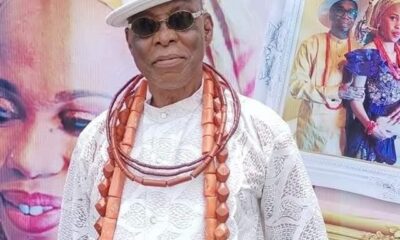
Note use his photograph along with the attached article













Dafinone Celebrates Akpeki, Hails APC Delta Central Chairman On Birthday

BREAKING: Former Warri Catholic Bishop, Afareha, Is Dead

Commuters Express Concern Over Gridlock At 3rd Marine Gate Road Junction

Cult Clash Kills Four In Warri

John Nani Congratulates Idjerhe Monarch On 60th Birthday, 5th Coronation Anniversary

Senator Dafinone Felicitates Ovie Of Idjerhe Kingdom, As Monarch Clocks 60, 5 Years On The Throne

Delta North 2027: Senator Ned Nwoko, A Superior Argument And A Safer Aspiration

Azemhe Azena Resigns From Omega Fire Ministry After 18 Years Of Service

DTSG Directs Primary, Secondary Schools To Resume Monday, January 5

Cuffs Snapped, Justice Mocked, As ₦800M Land Scam Kingpin Bolts From Police Custody In Broad Daylight

UBA Dragged To Court For Allegedly Opening Secret Account That Landed Customer In EFCC Net

Awhefeada Set To Light Up DELSU January 15

Ukoko R’ Emoto Of DELSU Confers Award Of Excellence On Asagba

Renowned Journalist & Former DELSU Dean Of Law, Emiola, Laid To Rest At Ogbomoso


-
 Church Gists21 hours ago
BREAKING: Former Warri Catholic Bishop, Afareha, Is Dead
-
Crime23 hours ago
Cult Clash Kills Four In Warri
-
News23 hours ago
Commuters Express Concern Over Gridlock At 3rd Marine Gate Road Junction
-
News2 hours ago
Dafinone Celebrates Akpeki, Hails APC Delta Central Chairman On Birthday