Feature
US, Kwankwaso And Globalization Of Kwankwasiyya

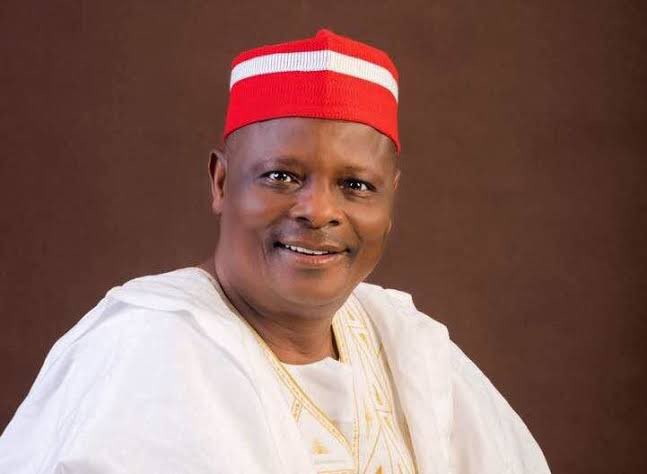
By Muhammad A. Bello, fsdu, fsi, mspsp.
As the news of the United States placing of Senator Rabiu Musa Kwankwaso on its visa ban list, his implied link to terrorism and anti-Christian rhetoric trended Wednesday, I thought deep and hard about the import of this to this populist.
Hours later my resolve is that America has just internationally popularized this political juggernaut FOC (free of charge). Now, his profile has advanced from that of a third position ideologue to a robust global reckoning. This couldn’t have come at a better time and with cost less effort than now. By attempting to vilify Senator Rabiu Musa Kwankwaso in the “Nigeria Religious Freedom and Accountability Act of 2026,” (HR 7457), Republican Congressmen (led by Riley Moore and Chris Smith) have inadvertently handed him the martyrdom capital, the most potent weapon in Northern Nigerian politics:.
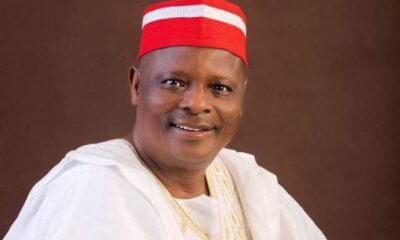
Known as a highly disciplined and networked ideologue whose Kwankwasiyya movement bypasses traditional party structures to create a direct original link between the leader and the Talakawa (masses), his tactical mobilization utilizes education and human capital development—such as the massive scholarship programs—as a form of strategic foresight. By building the mind, he creates a loyalist vanguard that functions as a parallel power structure to the formal state.
His stance is often described as a blend of left-wing economic empowerment and right-wing social discipline. This hitherto third position allows him to maintain a controlled wilderness of political support that is resistant to the standard kinetic political maneuvers of the ruling APC or PDP.
Like Dexter Filkins 2013 article brought the moniker Shadow Commander into mainstream, in-depth public discourse, detailing the role of slain Qasem Soleimani in managing Iranian proxy militias in Iraq and Syria to full glare of the world, the bill by American congressmen trying to vilify Kwankwaso has now become the
earliest, most prominent and detailed profiling of a national politician mostly invisible to the outside world. Herein lies the inversion. In the complexity of Northern politics, being targeted by Western powers—especially on religious grounds—the Moore-Smith bill is not a mark of shame but a certificate of authenticity. The Result is that the US has vetted him as the most significant threat to the status quo, effectively crowning him the grand arbiter of the Arewa—a title others held through charisma, but Kwankwaso now holds through institutional defiance.
Kwankwaso is no longer just a local champion of Kano. He is now the international face of the Northern resistance. A vanguard of education, his massive scholarship programs and human capital investment are now being reframed. If the US sees a threat, the Talakawa see a protector who builds the mind to resist external colonization. By leveraging the US Congress’s freebie exposure, he has bypassed the need for expensive international PR. He is now the necessary variable that global powers must negotiate with if they want stability in the Lake Chad Basin or the Sahel.
This development serves as a strategic and narrative windfall for Kwankwaso—a figure previously labeled a “regional actor,” a critique that sparked significant backlash from his loyalists. After years of failing to expand his influence beyond his Kano stronghold, he has finally secured the political leverage needed to transcend that limitation.
This moment likely provides the exact momentum he requires to reinvent himself as the preeminent guardian of the Hausa-speaking Muslim North, stepping into the central node of Northern Muslim arbitration and moral authority, a position of moral and political hegemony that has remained largely vacant in the contemporary era.
Operationalizing the Northern marginalization narrative, Kwankwaso has already begun labeling the current administration’s policies as a “plan to colonize the North” (2024/2025). By positioning himself as the only leader willing to speak truth to power on behalf of the Arewa, he builds a martyrdom capital. He is betting that the Abuja will be unable to suppress this narrative without triggering the raw rage of his supporters (the Kwankwasiyya movement).
ALSO READ: Police Arrest Suspected Armed Robber, Recover Locally Made Pistol In Ozoro
Unlike Buhari, who relied on a cult of personality, Kwankwaso uses the Kwankwasiyya movement—a highly disciplined, red-cap-wearing vanguard. In 2027, he can leverage Kano’s massive voting bloc to strangle the electoral chances of any candidate who does not pass through his arbitration. He has already asserted that Kano’s votes can overshadow entire geopolitical zones. His strategy: is creating a unified cognitive map for the North, where he is the sole gatekeeper of Northern interests.
Kwankwaso’s 2026/2027 strategy is one of aggressive transactionalism. He has stated he will only merge or ally with other parties (like Peter Obi’s faction or a reformed PDP) if he holds the Presidential or VP slot. He is leveraging the silence from other Northern leaders who are currently sidelined. By becoming the unofficial leader of the north, he makes himself the necessary partner for any southern candidate (like Tinubu or a challenger) who needs the North to win.
Kwankwaso also leverages the hiding of the current northern ruling class. As internal divisions plague the APC and PDP, his NNPP remains a disciplined monolith in the North-West. He can offer the state a solution to the wilderness—claiming that only his brand of disciplined, grassroots leadership can end the insecurity that the current kinetic trap has failed to stop.
For the discerning politician, home or abroad, Kwankwaso now represents a high-stakes variable that the state may choose to co-opt him to avoid a Northern uprising. The state may dismiss him as a local champion again, only to find that his political war leader schema has already captured the soul of the Northern voter.
The US Congress has inadvertently cleared Kwankwaso’s path to the arbitration throne. By attempting to label him a religious extremist, they have failed to account for the leadership variable in the North: the state’s enemy is the people’s vanguard.
Kwankwaso has successfully leveraged the pathological secrecy of his rivals into a global transparency. He is no longer fighting for Kano. He is fighting for the soul of the Arewa. The state may attempt to co-opt him to avoid an uprising, but the martyrdom capital generated by this US bill ensures that Kwankwaso is no longer a pawn in the Nigerian game.
Bello resides in Abuja.







DELSU Announces 2026/2027 Academic Calendar, Fixes Matriculation For November 7

Delta South ADC Ticket: Orette Seeks Legal Vindication, Urges Supporters To Stay Calm, Continues Campaign

PRESS STATEMENT: Omo-Agege Fires Back At Aguariavwodo, Lists Projects, Says Urhobo Will Reject APC In 2027

Oborevwori Orders Immediate Overhaul Of All Dilapidated Public Schools In Delta

APC Plans To Buy PVCs From Delta Voters With Fake Empowerment, Obidient/OK Movement Alleges

UNIDEL VC Urges Nigerians To Support Universities In Their Localities

Bayelsa @30 Spending Claims: Setting The Record Straight On Diri Administration’s 2026 Expenditure

DELSU Releases 2026/2027 UTME Cut-Off Marks, Clinical Science Tops With 77.3

Otefe: Delta State Polytechnic Announces 2026/2027 Post-UTME Screening Dates

Edith Okowa Adopts 50 UNIDEL Students, Pledges Annual N200,000 Support

THE World University Rankings 2027 To Feature Record 2,297 Institutions

Police Arrest One Suspect Over Death Of Delta Education Deputy Director

2nd Term: DELSU Postgraduate Students Purchase Nomination Form For Ivworin

Ughelli North Chairman Calls For Calm Over Death Of Delta Education Deputy Director


-
 News17 hours ago
Bayelsa @30 Spending Claims: Setting The Record Straight On Diri Administration’s 2026 Expenditure
-
News14 hours ago
APC Plans To Buy PVCs From Delta Voters With Fake Empowerment, Obidient/OK Movement Alleges
-
Education15 hours ago
UNIDEL VC Urges Nigerians To Support Universities In Their Localities
-
Education8 hours ago
Oborevwori Orders Immediate Overhaul Of All Dilapidated Public Schools In Delta
-
Politics8 hours ago
PRESS STATEMENT: Omo-Agege Fires Back At Aguariavwodo, Lists Projects, Says Urhobo Will Reject APC In 2027