
Education
Dafinone To DELSU Graduates: Nigeria’s Future Depends On Turning Potential Into Productivity

By Akpobomeh Oghenerukevwe
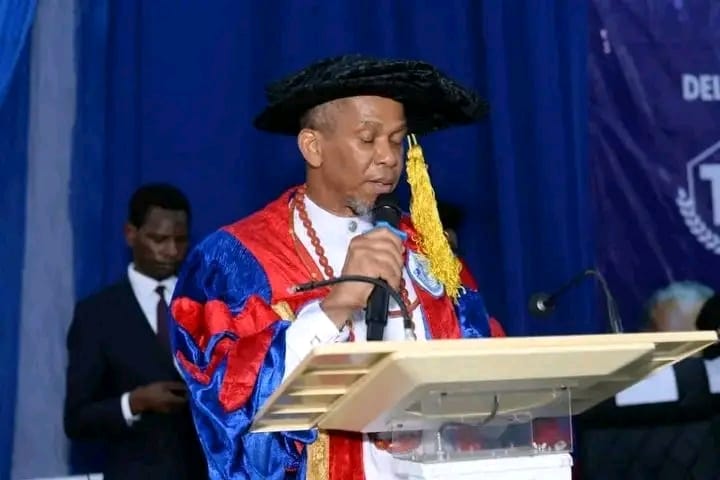
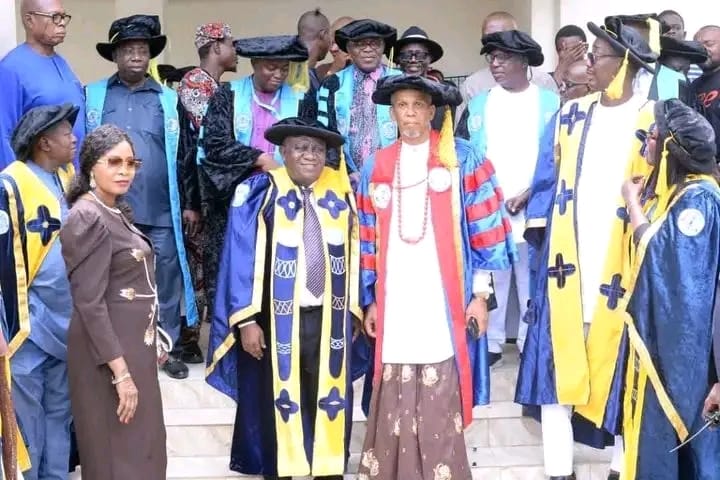
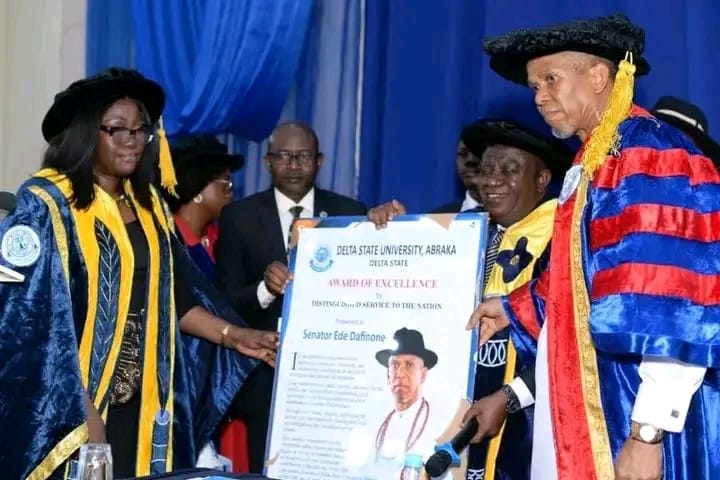
The 18th Convocation Lecture of Delta State University (DELSU), Abraka, delivered a strong message on national development as Senator Ede Dafinone urged graduating students to move beyond academic qualifications and focus on productivity, discipline, and value creation in shaping Nigeria’s future.
Delivering a lecture on Wednesday titled “Harnessing Nigeria’s Potential: Strategies for Sustainable Development,” the Delta Central senator challenged graduates to rethink the country’s development trajectory, arguing that Nigeria’s greatest challenge is not lack of resources, but weak systems and poor execution.
He described Nigeria as a nation rich in oil, gas, solid minerals, agricultural land, and human capital, yet still struggling with poverty, infrastructure deficits, and underperformance.
According to him, the country’s central problem lies in its inability to convert potential into measurable and sustained productivity.
“Nigeria is not short of talent or resources,” he said, adding: “The real issue is that strong individuals are often trapped in weak systems.”
Dafinone explained that systems, not individuals, determine outcomes in any society, stressing that even exceptional talent cannot thrive in poorly structured environments. He noted that sustainable development depends on strong institutions, consistent policies, and disciplined implementation across generations.
ALSO READ:DELSU To Honour Indimi, Others As VC Unveils New Projects Ahead Of Convocation
Drawing examples from countries such as South Korea, Singapore, and Rwanda, he highlighted how long-term planning, institutional continuity, and political discipline have driven national transformation elsewhere.
The senator also spoke on the growing importance of the global knowledge economy, describing it as a major opportunity for Nigeria’s young population. He said digital technology has removed traditional barriers to entry, enabling Nigerians to compete globally from any location.
He referenced the success of Nigerian innovators and creatives in fintech and entertainment, including global music stars such as Davido and Wizkid, as evidence that Nigerian talent can achieve international relevance when properly supported.
However, he cautioned that technology, including artificial intelligence, cannot replace governance, infrastructure, or disciplined thinking, but only amplifies existing systems.
On the issue of migration, Dafinone acknowledged the desire of many young Nigerians to seek opportunities abroad but urged them to also consider their role in national development.
“The question is not where you are, but what you are building,” he said, calling on graduates to contribute meaningfully to Nigeria’s progress from within or wherever they find themselves.
A major focus of his lecture was what he described as the discipline of execution. He stressed that national transformation begins with individual responsibility — reliability, consistency, and the ability to deliver results.
“Every commitment kept builds trust. Every problem solved builds capacity,” he said, warning that lack of focus and digital distractions are weakening productivity in today’s generation.
He told graduates that academic certificates alone are no longer sufficient in the modern global economy, which now prioritizes competence over credentials.
“Formal education is not the destination,” he said. “It is the beginning of lifelong learning and skill development.”
In his closing remarks, Dafinone charged the graduating class to embrace discipline, innovation, and long-term thinking as tools for national transformation.
“You are entering a challenging Nigeria,” he said, “but it is in difficult environments that the most impactful leaders are formed.”
The Vice-Chancellor of DELSU, Prof. Samuel Asagba, later described the lecture as insightful and thought-provoking, noting that its message would remain relevant to both students and staff beyond the convocation event.
The session concluded with cultural performances and a luncheon, rounding off a lecture that centered on reflection, responsibility, and the urgent need to shift Nigeria from potential to productivity.


Under Governor Soludo, Anambra Is Rising, Poverty Is Reducing

Oyowe Thanks NUJ Members, Stakeholders After Re-election As Delta Chairman

Olisa Inspects Construction Of Agwetiti Assembly Hall, Assures Completion

Ahon Urges Delta NUJ To Embrace Unity, Deepen Partnership with Government

Oborevwori Congratulates Oyowe On Re-election As Delta NUJ Chairman

Delta NUJ: Obieh Thanks Supporters, Congratulates Oyowe, Says 17-Vote Loss Not Defeat

History Made As Oasis Magazine Chapel Votes In NUJ Delta Elections, Umukoro, Abuza React

Otefe: Delta State Polytechnic Announces 2026/2027 Post-UTME Screening Dates

Police Arrest One Suspect Over Death Of Delta Education Deputy Director

National Association Of Proprietors Of Private Schools Announces Activities For 2026 NAPPS Day

2nd Term: DELSU Postgraduate Students Purchase Nomination Form For Ivworin

THE World University Rankings 2027 To Feature Record 2,297 Institutions

Delta Police Foil Kidnap Attempt in Abraka, Arrest Two Suspects


