Feature
Atiku Abubakar And The 2027 Question: Is He The President Nigeria Needs?

By Fred Akpewe, Delta ADC Publicity Secretary
Nigeria will enter the 2027 presidential election at one of the most consequential moments in its democratic history. The country will not merely be choosing another government; Nigerians will be deciding what kind of leadership can restore confidence, rebuild institutions, strengthen the economy, improve security and reunite a deeply divided nation.
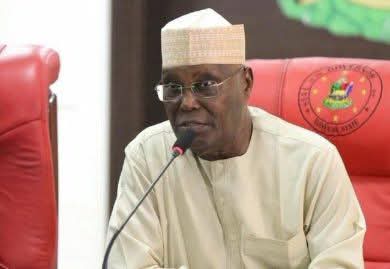
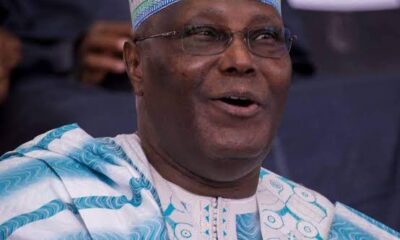
Against this background, former Vice President Atiku Abubakar represents an experienced and nationally tested option for Nigeria in 2027.
Atiku brings to the contest something Nigeria desperately needs: experience without military authoritarianism, democratic credentials without political naivety, and decades of engagement with both government and the private sector.
His case is not simply about ambition. It is about whether his accumulated experience can now be deployed to address the country’s mounting challenges.
Experience at the Highest Level
Atiku Abubakar has spent decades participating in Nigeria’s democratic process. His political journey has taken him from the political environment of the Second Republic and the National Assembly era to the vice presidency and several presidential contests.
Nigeria’s problems have become too complex to be approached as political experiments. The country needs a president who understands the machinery of government, the federal structure, the economy, the political system and the delicate balance required to govern a diverse federation.
Atiku has operated at the highest levels of government and understands both the responsibilities and limitations of the presidency.
As Vice President under President Olusegun Obasanjo, Atiku was part of an administration that implemented major economic reforms during the Fourth Republic, including telecommunications liberalisation, privatisation and other reforms that contributed to Nigeria’s economic transformation and its eventual Paris Club debt relief.
Dr. Ngozi Okonjo-Iweala, who served as Finance Minister and Coordinating Minister for the Economy during the Obasanjo administration and is now Director-General of the World Trade Organization, has on various occasions acknowledged the roles played by members of that administration in advancing its economic reform agenda.
It is against this background that the continuing political disagreements between Obasanjo and Atiku should be viewed within the broader context of their years in government. Whatever criticisms may exist, both men were part of the same administration and shared responsibility for its achievements as well as its shortcomings.
ALSO READ: FMC Ovwian Clarifies Recruitment Status, Warns Public Against Fraudsters
For Nigerians, the more important question today is not the political disputes of the past, but what lessons can be drawn from that experience and applied to the challenges of the present.
A Private-Sector Mindset for a Troubled Economy
At this stage of Nigeria’s political and economic development, the country needs leadership capable of unlocking the productive capacity of the private sector.
One of Nigeria’s greatest challenges is economic productivity. The country must move beyond excessive dependence on crude oil revenues and government spending and create an environment where businesses can thrive, industries can expand and millions of young Nigerians can find meaningful employment.
Atiku’s long association with entrepreneurship and the private sector gives him a perspective that can complement his public-sector experience.
His economic philosophy has consistently emphasised private-sector participation, competition, investment and decentralisation. In July 2026, Atiku also argued that a federal electricity policy shift reflected aspects of a decentralised power model he had advocated for more than two decades.
For a country struggling with unreliable electricity, unemployment, inflation and weak industrial capacity, his economic perspective deserves serious consideration.
Nigeria needs an economy that produces, not merely one that consumes.
It needs policies that encourage investment rather than discourage it, industries that create employment rather than depend indefinitely on government intervention, and an economic structure that allows states and communities to participate more effectively in development.
Nigeria Needs Security, Not Rhetoric
Another defining issue of the 2027 election will be security.
The insecurity confronting Nigerians has become one of the country’s most painful realities. Farmers cannot confidently cultivate their land in many communities. Families live with the fear of kidnapping and violent attacks, while businesses face enormous security costs.
Atiku has placed security high on his political agenda, including condemning attacks in Southern Kaduna and calling for stronger protection of lives and property.
But condemnation alone is not enough.
The next administration must fundamentally improve Nigeria’s security architecture, strengthen intelligence gathering, enhance policing capacity, address the causes of insecurity and restore citizens’ confidence in the ability of the state to protect them.
A government that cannot guarantee the safety of its citizens cannot effectively guarantee economic prosperity.
A President for All Nigerians
Perhaps one of Atiku’s strongest arguments is the question of national inclusion.
Nigeria is too diverse to be governed as though one region, religion or ethnic group owns the country. The presidency must belong to all Nigerians.
The country needs a leader who can recognise its diversity not as a weakness, but as a source of strength.
Atiku’s political career has given him relationships and political networks across different parts of Nigeria. His proposed 2027 partnership with former Rivers State Governor Rotimi Amaechi is significant in this regard.
A political partnership involving prominent figures from different parts of the country could potentially broaden the opposition coalition and offer Nigerians an alternative to the prevailing political establishment.
The central question, however, should remain whether such a coalition can translate its political diversity into an effective and credible programme for governance.
2027 Should Be About Competence
The most important question in 2027 should not
simply be: Where is the candidate from?
It should be: What can the candidate do for Nigeria?
Can he secure the country?
Can he make electricity more available and reliable?
Can he create jobs?
Can he reduce the cost of governance?
Can he attract domestic and foreign investment?
Can he strengthen the economy and improve the purchasing power of Nigerians?
Can he restore confidence in public institutions?
Can he unite Nigerians?
These are the questions that should help determine the next president of Nigeria.
Atiku’s supporters believe his experience makes him particularly prepared for this task.
His critics, however, point to his age, his long presidential ambition and the organisational difficulties facing the opposition coalition. Those criticisms should not be dismissed because they are part of legitimate democratic debate.
The burden therefore rests on Atiku and his political allies to convince Nigerians not merely that they can win an election, but that they can build a credible, disciplined, competent and inclusive government.
The Final Opportunity: Turning Experience into Legacy
Atiku Abubakar has reportedly described 2027 as his final presidential outing. If that indeed becomes his final attempt, the election will represent more than another chapter in a long political career.
It could become the moment when decades of political experience are either transformed into national leadership or remembered simply as an unfinished ambition.
After decades in Nigerian public life, can Atiku Abubakar finally translate his experience into the presidency and use it to build the Nigeria he has spent years seeking to lead?
That is the historic question before him.
Nigeria does not need a president who merely occupies Aso Rock. It needs a president who understands the enormity of the Nigerian problem and possesses the experience, political maturity, courage and national outlook required to confront it.
For those who believe that experience, economic reform, national inclusion, democratic continuity and private-sector-driven growth should define Nigeria’s next chapter, Atiku Abubakar offers a compelling proposition for 2027.
But the ultimate decision belongs to Nigerians.
And 2027 may well be the moment when the country decides whether Atiku Abubakar’s decades of political experience will finally become his greatest contribution to the Nigerian state.








DELSU Gives Newly Admitted Students October 19, 20 Deadlines for Admission Requirements

Afiesere Community Hails Okodaso On His Conferment As Senior Advocate Of Nigeria Rank

Delta Police Arrest Five Suspected Robbers, Kidnappers, Recover Firearms

Under Governor Soludo, Anambra Is Rising, Poverty Is Reducing

Oyowe Thanks NUJ Members, Stakeholders After Re-election As Delta Chairman

Olisa Inspects Construction Of Agwetiti Assembly Hall, Assures Completion

Ahon Urges Delta NUJ To Embrace Unity, Deepen Partnership with Government

Otefe: Delta State Polytechnic Announces 2026/2027 Post-UTME Screening Dates

Police Arrest One Suspect Over Death Of Delta Education Deputy Director

National Association Of Proprietors Of Private Schools Announces Activities For 2026 NAPPS Day

2nd Term: DELSU Postgraduate Students Purchase Nomination Form For Ivworin

THE World University Rankings 2027 To Feature Record 2,297 Institutions

Delta Police Foil Kidnap Attempt in Abraka, Arrest Two Suspects

Tobore Agbah: Jaro Egbo Explains Demolition Action, Says NDC Rally Not Reason For Enforcement


-
 Crime6 hours ago
Delta Police Arrest Five Suspected Robbers, Kidnappers, Recover Firearms
-
News4 hours ago
Afiesere Community Hails Okodaso On His Conferment As Senior Advocate Of Nigeria Rank
-
Education4 hours ago
DELSU Gives Newly Admitted Students October 19, 20 Deadlines for Admission Requirements