News
DELCOM 2026: Prof Ogwezi Urges Communicators To Put Information Integrity Ahead Of Digital Attention

By: Faith Ebireri
The second day of the 7th edition of the Delta State Communication (DELCOM) three-day workshop on Wednesday, 19 August 2026, focused on the growing tension between the race for digital attention and the responsibility to preserve accuracy, credibility and information integrity.
The workshop, themed “Digital Communication and Crisis Management: Building Trust and Credibility for Democratic Governance,” brought together journalists, government communication personnel, public relations practitioners and other communication professionals for intensive sessions on contemporary communication practices.
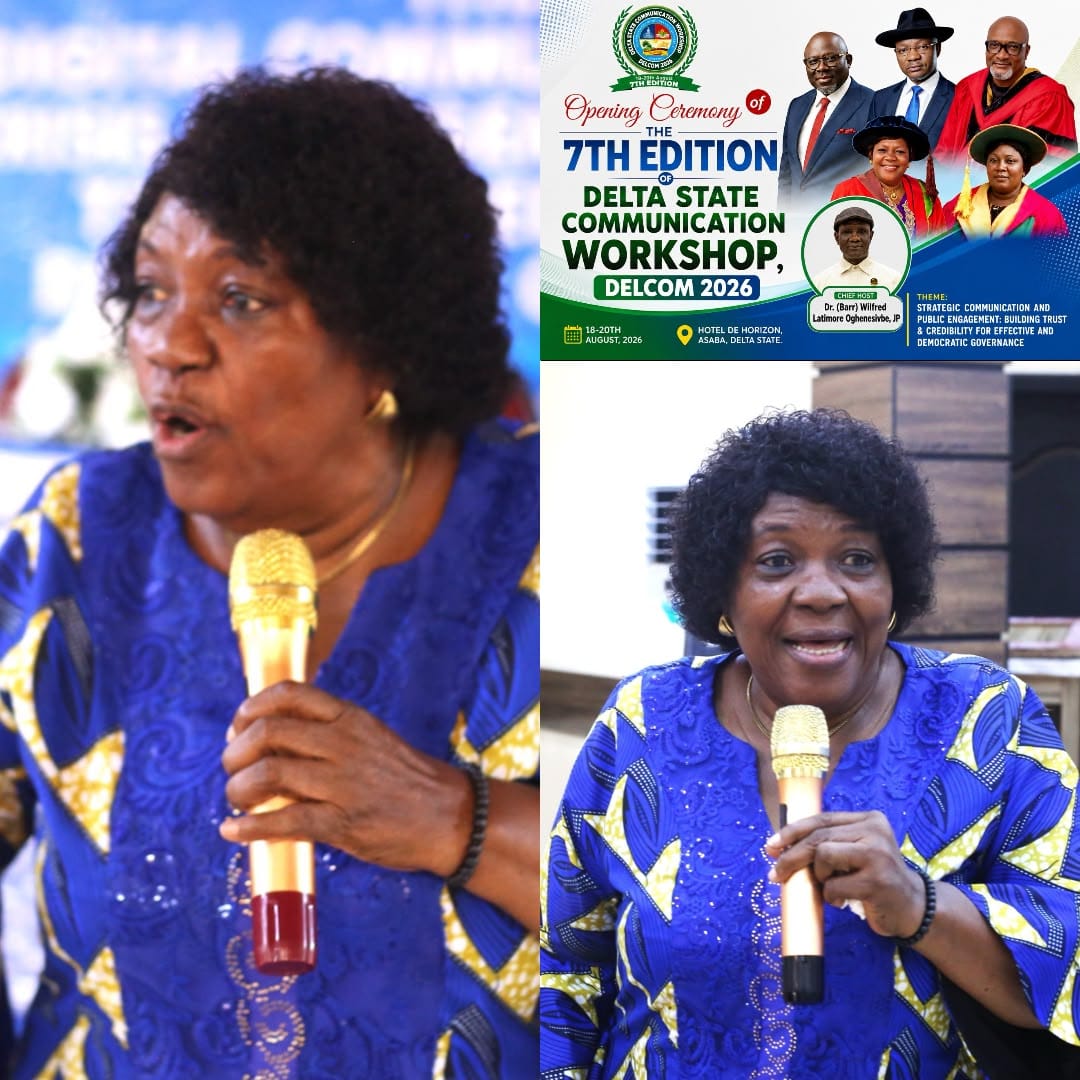
One of the major sessions on Day Two was delivered by Professor Joyce Ogwezi, who examined Digital Communication and Information Integrity, drawing attention to the changing dynamics of networked communication and the growing competition for audience attention across digital platforms.
Ogwezi observed that virtually every digital platform operates within an attention economy, where content creators, organisations and institutions compete continuously for the limited attention of audiences.
She cautioned that the competition for visibility could create an environment in which sensationalism, clickbait and other forms of attention-driven content gain prominence over accuracy and responsible communication.
According to her, attention should not be mistaken for accuracy, stressing that the popularity or reach of information does not necessarily determine its credibility.
She further explained information integrity as the degree to which information remains accurate, reliable, authentic, contextualised, transparent and trustworthy from the point at which it is created through its communication and subsequent sharing.
The professor also underscored the importance of effective communication skills, highlighting the four fundamental language skills of listening, speaking, reading and writing as essential competencies for communication professionals.
She noted that perception could differ from objective reality, observing that an individual’s perception may become their reality depending on the perspective from which they interpret information.
The workshop also featured a session on Media Relations and Strategic Engagement, which examined the influence of echo chambers and filter bubbles on public communication.
Participants were introduced to the ways in which repeated exposure to information that reinforces existing beliefs can limit people’s exposure to alternative evidence and perspectives.
The session identified confirmation bias and polarisation as some of the risks associated with such communication environments. These dynamics can reduce people’s willingness to reconsider claims while enabling information to spread rapidly within trusted networks, even when the information has not been adequately scrutinised.
To counter these challenges, participants were encouraged to embrace deep research and thorough preparation before creating, communicating or amplifying information.
Ogwezi also encouraged participants to remain receptive to learning, regardless of the source, emphasising the value of attentive listening in professional development.
“You can never tell what you’ll learn from somebody. Always listen,” she said.
The session further addressed digital identity auditing, urging communication professionals to pay deliberate attention to how they and the organisations they represent appear online.
Participants were encouraged to examine key elements of their digital identity, including their profile, biography, visuals, content, links and audience engagement.
The emphasis on digital identity reinforced the broader message of the workshop: credibility is not established solely by what a communicator says, but also by the consistency, quality and integrity of the information and identity presented across digital platforms.
The Day Two sessions therefore challenged participants to look beyond the pursuit of visibility and engagement and consider the broader responsibility attached to professional communication in an increasingly networked information environment.
As the workshop progresses, the emphasis remains on equipping communication practitioners with the knowledge and practical skills required to navigate digital communication, manage emerging challenges and contribute to a more credible and trustworthy communication system for democratic governance.





School Is No Scam: DESOPADEC Takes Campaign To Ogbe-Ijoh Grammar School

Gov. Soludo Celebrates Archbishop Of Onitsha, Most Reverend Valerian Okeke, At 73

Ejumi Appeals To Oborevwori For Establishment Of Ugboroke Secondary School

Delta Police Arrest Three Suspected Fraudsters For Impersonating Top Government Officials

Lagos Court Jails Former Banker For Fraud

Ogwashi-Uku Palace Rejects Ibusa Boundary Victory Claim, Says Oboshi River Remains Boundary

Uduaghan: ‘The Job Was 24 Hours’ — Ukubeyinje Recalls Former Delta Governor’s Unrelenting Work Ethic

Otefe: Delta State Polytechnic Announces 2026/2027 Post-UTME Screening Dates

Police Arrest One Suspect Over Death Of Delta Education Deputy Director

National Association Of Proprietors Of Private Schools Announces Activities For 2026 NAPPS Day

2nd Term: DELSU Postgraduate Students Purchase Nomination Form For Ivworin

Delta Police Foil Kidnap Attempt in Abraka, Arrest Two Suspects

Tobore Agbah: Jaro Egbo Explains Demolition Action, Says NDC Rally Not Reason For Enforcement

Ughelli North Chairman Calls For Calm Over Death Of Delta Education Deputy Director


-
 News18 hours ago
Uduaghan: ‘The Job Was 24 Hours’ — Ukubeyinje Recalls Former Delta Governor’s Unrelenting Work Ethic
-
News10 hours ago
Ogwashi-Uku Palace Rejects Ibusa Boundary Victory Claim, Says Oboshi River Remains Boundary
-
News8 hours ago
Lagos Court Jails Former Banker For Fraud
-
News4 hours ago
Gov. Soludo Celebrates Archbishop Of Onitsha, Most Reverend Valerian Okeke, At 73
-
News5 hours ago
Ejumi Appeals To Oborevwori For Establishment Of Ugboroke Secondary School