Feature
2027 Mandate Beyond Rhetoric: Why Senator Dafinone Remains A Critical Voice For Urhobo Nation

By Ovasa Ogaga
As the 2027 political horizon begins to take shape, the Urhobo Nation finds itself at a pivotal crossroads. In an era where political expediency often trumps ethnic interest, the need for a representative who transcends mere titles has never been more urgent. For the people of Delta Central, the quest for a “voice” isn’t about finding someone who can simply speak, but finding a leader whose words carry the weight of action, courage, and unyielding loyalty to his roots.
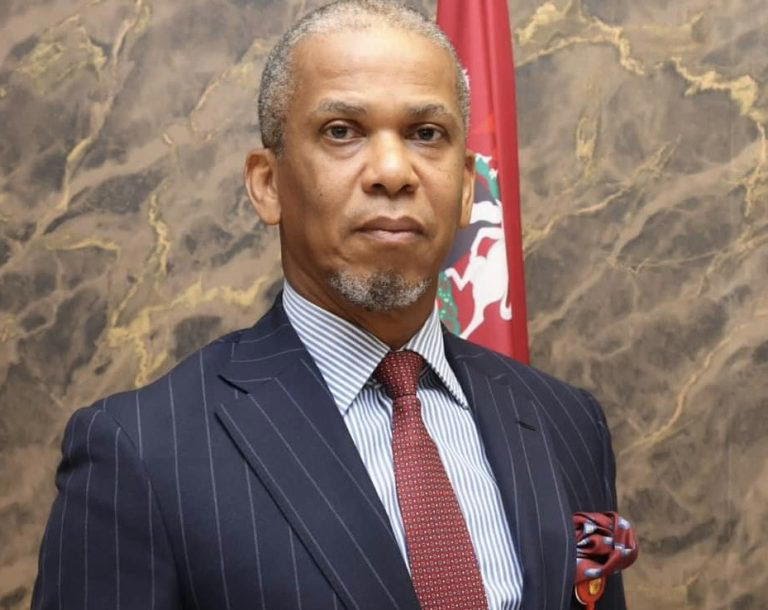
Senator Ede Dafinone has emerged not just as a legislator, but as a shield for the Urhobo interests. His tenure has been defined by a rare brand of “interventionist representation”—a style of leadership that doesn’t wait for the dust to settle before taking a stand. From the hallowed chambers of the Senate to the volatile terrains of communal crises, he has proven that his primary constituency is the heart of the Urhobo people.
One cannot discuss Dafinone’s impact without revisiting his decisive stance during the Okuama-Ewu crisis. When many would have retreated into diplomatic silence to avoid ruffling feathers at the federal level, Dafinone stepped forward. He became the advocate for the displaced, the voice for the Ewu Kingdom, and the bridge between a grieving community and the military authorities, ensuring that the plight of his people was neither ignored nor forgotten.
Furthermore, his intervention in the Warri Ward delineation issue showcased a leader who understands the intricate politics of identity and land. By speaking up for the Urhobos of Warri, Dafinone sent a clear message: no Urhobo man or woman, regardless of their location, will be marginalised under his watch. He recognised that ward boundaries are not just lines on a map; they are the foundations of political relevance and resource distribution.
His bravery was perhaps most visible during the physical threats to the Urhobo Progress Union (UPU) House in Warri. When the symbolic home of the Urhobo people was under siege, it was Dafinone’s swift and firm intervention that halted the aggression. Protecting the UPU House was more than a security measure; it was the preservation of the Urhobo soul and a refusal to allow the nation’s heritage to be desecrated.
ALSO READ: Second Batch Of National Health Fellows Meets Ede Dafinone Ahead Of Inauguration In Delta Central
In Sapele, his leadership has taken on a tone of principled defiance. By standing firm on the identity of the Okpe-Urhobo, he has demonstrated a refusal to trade cultural clarity for political convenience. He understands that a leader who cannot defend the history and identity of his people cannot be trusted to secure their future.
The 2027 race is often viewed through the lens of individual ambition, but for Dafinone, it appears to be a matter of duty. The Urhobo Nation needs a man who can put his personal political aspirations on the back burner when the collective interest of the people is at stake. We have seen far too many “fair-weather” representatives who disappear when the political climate becomes stormy; Dafinone has proven to be the firm anchor.
What distinguishes the Senator is his rejection of “political expediency.” In a system where many politicians calculate their every move based on how it will affect their next election, Dafinone has frequently chosen the harder right over the easier wrong. He has shown that he would rather risk political capital than see an Urhobo community suffer a sense of abandonment.
The Senate is a place of numbers, but it is also a place of influence. Having a second-term Senator provides the Urhobo Nation with the advantage of ranking status, which translates to better committee placements and greater legislative leverage. However, ranking status is only useful if the person holding it has the character to use it for the common good. Dafinone has already laid the groundwork; a second term would allow him to build the fortress.
We live in a time of great economic and social flux in Nigeria. The Niger Delta, and specifically the Urhobo heartland, requires a representative who can navigate the complexities of federal policy while keeping a local focus. Dafinone’s professional background as a world-class accountant gives him the analytical edge to scrutinise budgets and ensure that Delta Central gets its fair share of the national cake.
Beyond the projects and the bills, there is the matter of dignity. There is a certain pride that comes with knowing your representative cannot be intimidated or bought. Whether he is negotiating in Abuja or mediating a local dispute in Delta State, Dafinone carries the Urhobo name with a level of sophistication and grit that commands respect from his peers across the country.
Consistency is the hallmark of his leadership. From his first day in office, the trajectory has been one of steady advocacy. He hasn’t just “found his voice” because an election is approaching; he has been using it consistently to address the security, economic, and social challenges facing the Urhobo people.
As we look toward 2027 and beyond, the criteria for leadership must be elevated. We can no longer afford representatives who use the Urhobo Nation as a ladder for personal ego. We need a man who views the mandate as a sacred trust—a man who has already been tested in the fire of crisis and emerged with his integrity intact.
The evidence is clear: Senator Ede Dafinone is that voice. He has worked for the Okuama, stood for the Urhobos of Warri, protected our ancestral institutions, and defended our identity in Sapele. He has proven that his heartbeat is synchronised with the aspirations of the Urhobo Nation.
For a future that is secure, respected, and prosperous, the choice is not just about a party or a person—it is about the continuity of a powerful, fearless voice. For the Urhobo Nation to remain a force to be reckoned with in the Nigerian polity, Ede Dafinone’s return to the Senate is not just a political preference; it is a strategic necessity.
By Ovasa Ogaga, A Media and Public Affairs Analyst writes from Ughelli.









NSE Warri: Okorodudu Hails Incoming Chairman, Pledges Stronger Partnership

NAPPS Delta Chairman Says Secretariat Project Won’t Stop At Groundbreaking, As South-South VP Hails Chapter

Dispense Justice Without Fear Or Favour, Oborevwori Tells Judges

Ajede Marks 2026 International Day Of ‘The Girl Child’ With Empowerment Programme In Ukwuani

NAPPS Delta Secretariat, Fulfilment Of A Long-Standing Dream — Ifoghere

NAPPS Delta: Founding President Urges Members To Prioritise Secretariat Project

LEGAL YEAR: Oborevwori Charges Judges, Lawyers On Integrity, Rule Of Law

Otefe: Delta State Polytechnic Announces 2026/2027 Post-UTME Screening Dates

Police Arrest One Suspect Over Death Of Delta Education Deputy Director

THE World University Rankings 2027 To Feature Record 2,297 Institutions

National Association Of Proprietors Of Private Schools Announces Activities For 2026 NAPPS Day

Edith Okowa Adopts 50 UNIDEL Students, Pledges Annual N200,000 Support

2nd Term: DELSU Postgraduate Students Purchase Nomination Form For Ivworin

Ughelli North Chairman Calls For Calm Over Death Of Delta Education Deputy Director


-
 Education11 hours ago
NAPPS Delta Chairman Says Secretariat Project Won’t Stop At Groundbreaking, As South-South VP Hails Chapter
-
News21 hours ago
Ajede Marks 2026 International Day Of ‘The Girl Child’ With Empowerment Programme In Ukwuani
-
News21 hours ago
Dispense Justice Without Fear Or Favour, Oborevwori Tells Judges
-
News8 hours ago
NSE Warri: Okorodudu Hails Incoming Chairman, Pledges Stronger Partnership