Column
Still On Government Neglect Of Our Hospitals…

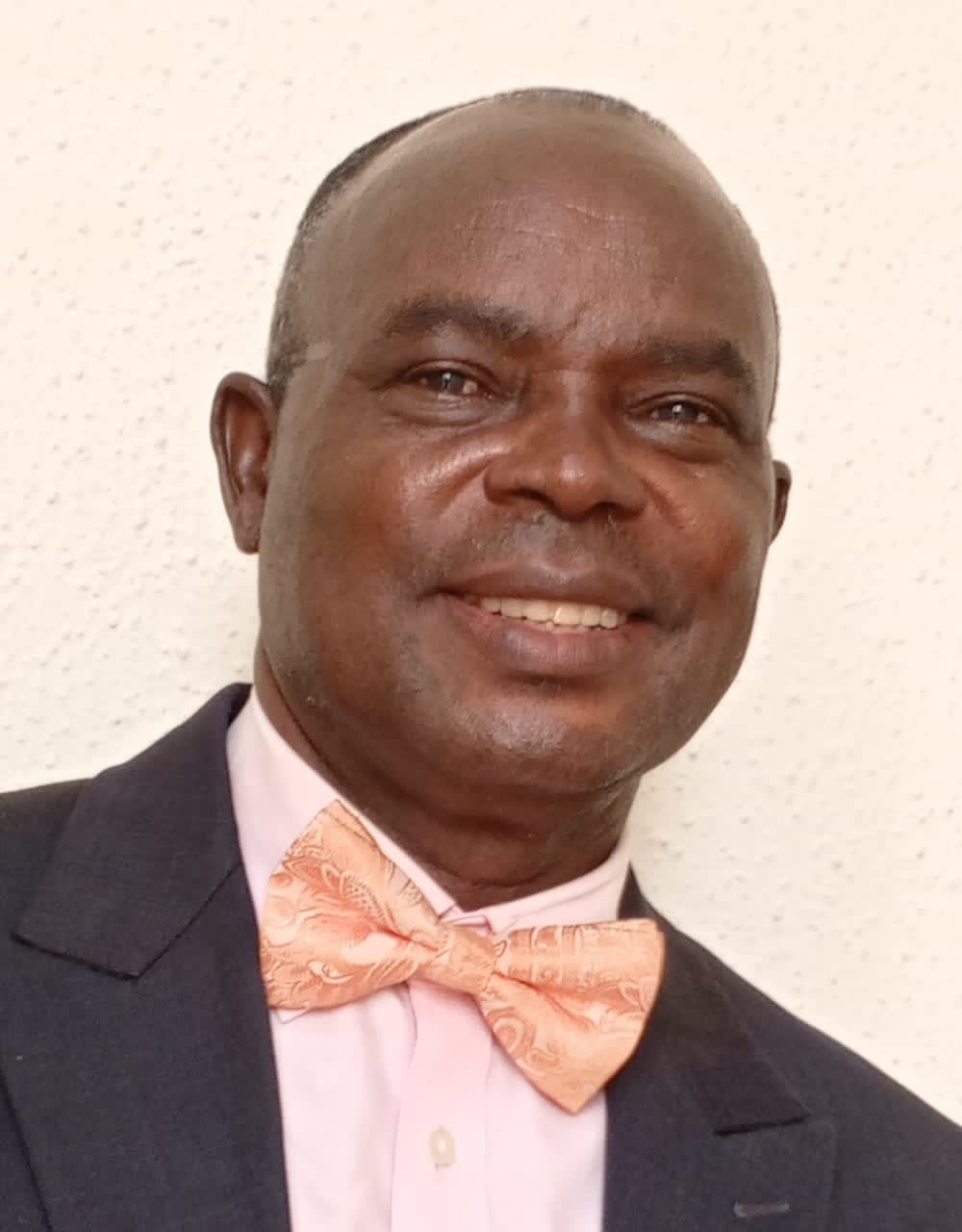
By Bolanle BOLAWOLE
[email protected] 0705 263 1058
Few days ago, a senior pastor of mine called and spoke fata-fata, as they say, about the state of our hospitals. His preambles were something else; it went something like this: Pastor Bolawole, I know you journalists are part of the problems of this country! You don’t tell our leaders the truth. Is it because of the brown envelopes you collect from them? That is why you are in cahoots with them.” I had started wondering what was the matter before he hit the nail on the head: Someone dear to him was ill and they needed him or her (I can’t remember which one) to undergo MRI scanning but no MRI machine was available “in the whole of Ogun state”, he said. Eventually, they had to hire a vehicle for N50,000:00 to convey the sick person to the Redeemed Christian Church of God (RCCG) medical facility at the Redemption City (formerly Redemption Camp) along the Lagos-Ibadan Expressway, Mowe, for the MRI to be done. “And they will say Redeemed (RCCG) is not doing anything!” As I made to speak, he rounded up with “I just felt I should let you know about this” and hung up.
Not a single MRI machine in the whole of Ogun state? It appears unbelievable. But come to think about it, is Redemption City, where they eventually found one, not in Ogun state? Syllogism, which I learnt in Philosophy 101, taught at the then University of Ife (now Obafemi Awolowo University), Ile-Ife, by Dr. Dipo Fashina (aka Jingo), as he then was, is instructive here. According to Google, a syllogism is a form of logical reasoning that uses deductive logic to combine two statements and arrive at a new conclusion. A standard syllogism has three parts: The first part is the major premise, which is a general statement or rule that is assumed to be true. The second part is a minor premise, specific fact or case that relates to the major premise. The third part is the conclusion, which is the logical result that follows from the two premises.
A classic example is: All humans are mortal/Socrates is a human/Therefore, Socrates is mortal. Another example is: All mammals are warm-blooded/All dogs are mammals/Therefore, all dogs are warm-blooded.” Arising from the above, we can construct our own syllogism thus: Redemption City is in Ogun state/MRI machine was found at Redemption City/Therefore, there is an MRI machine in Ogun state! QED!
The curiosity of a journalist still pushed me to ask questions about MRI machines. What exactly are they and their use? I got the following answer: “An MRI machine is a medical imaging device that uses powerful magnets and radio waves to create highly detailed, cross-sectional pictures of the inside of the body. Healthcare providers use MRI scans to evaluate, diagnose, and monitor a wide variety of medical conditions without using harmful radiation. It is especially effective for viewing soft tissues. Common uses include examining the brain and spinal cord; diagnosing strokes, multiple sclerosis (MS), brain tumors, aneurysms, and spinal cord injuries.
It is also useful in detecting “tears in ligaments, tendons, and cartilage (such as in the knee or shoulder), as well as bone infections, evaluating heart damage from heart attacks, congenital heart disease, heart structure, and blood flow abnormalities. MRI machines are also used in checking organs in the chest, abdomen, and pelvis—including the liver, kidneys, pancreas, prostate, and uterus—for tumors, inflammation, or disease.
Waooh! If MRI machines are this useful; nay, indispensable, how come they are not commonplace in our hospitals? Are their costs prohibitive? I got the following response: “New clinical MRI machines typically cost between $1 million and $3 million while advanced 7T research systems can reach $7 million. Purchase Price Breakdown: New Systems: A standard 1.5T or 3T MRI scanner costs $900,000 to over $3.7 million for the hardware alone. Refurbished or Pre-Owned Systems: Used or refurbished units range from $100,000 to $700,000, depending on field strength (Tesla rating), bore size, and condition. Budget/Low-Field Open MRIs: Basic or low-field models (0.25T–0.5T) cost between $130,000 and $300,000. Additional Ownership and Operating Expenses: The sticker price is only part of the investment; total cost of ownership involves heavy infrastructure and maintenance outlays: Installation and Site Preparation: Specialized room construction, radiofrequency (RF) shielding, cryogen venting, and structural reinforcement typically add $75,000 or more. Maintenance and Cooling: Annual service contracts and maintenance range from $10,000 to $100,000 per year, driven heavily by liquid helium consumption used to keep superconducting magnets cold (though newer low-helium or helium-free technologies are emerging).
These are not costs that even a local government cannot afford in today’s Nigeria, especially with the quantum of money the Bola Ahmed Tinubu administration is heaping on the two tiers of government – state and local governments. But to make assurance doubly sure, as they say, I asked Google if it has any information on the availability of MRI machines in Ogun state. This is the answer I got: “Yes, an advanced MRI machine is available in Ogun state at the private specialist facility – Redeemer’s Health Village located in Redemption City, Mowe.”
It goes further to say: “Redeemer’s Health Village (RHV) houses a 1.5 Tesla MRI system featuring a wide 70 cm bore capable of accommodating plus-sized patients weighing over 300 kg. They also offer subsidized scan slots for low-income and indigent patients.” Thumbs up for RCCG, but thumbs down for Ogun state because “major public healthcare facilities in the state – such as the Olabisi Onabanjo University Teaching Hospital (OOUTH) in Sagamu and the State Hospital in Ijaiye have lacked functional on-site MRI equipment, with the State House of Assembly actively pushing for their procurement.”
It is common knowledge that our leaders at all levels devote scanty attention to the state of our hospitals, primarily because they don’t patronize them. They always fly abroad for medical treatment – and can also afford the charges in the best private hospitals available locally. These days, we are inundated with stories of “lack of bed space” in virtually all our hospitals. The father of one of my choriters spent hours on his wife’s wrapper spread on the bare floor along the corridors of LUTH before he was attended to because there was no bed space. He died. My panel-beater’s 14-year-old girl was rejected in one government hospital after another because of lack of bed space. She died.
The unprofessional conduct of health workers is another worrisome experience that anyone unfortunate enough to approach government hospitals have had to tell ad nauseam, ad infinitum. My treasured niece, Abosede Oluwayemi Edema, aged 54, died last June at the Federal Medical Centre, Ebute-Metta, Lagos after being left unattended from 2.00am until she fell into a coma at 4.00pm. Her blood infection, which should not have killed her if she had been adequately and promptly attended to, was left untreated till she died. Doctors’ negligence, nonchalance, unprofessional conduct, and the complicity and duplicity of her husband, sent her to an untimely grave. We can go on and on!
One story that made headline news last week was the death of one Mr. Olatunde John Kolawole, which reportedly occurred at the Lagos State Teaching Hospital (LASUTH), Ikeja. Kolawole had an accident while trying to avoid an errant tricycle rider; he promptly got to the hospital but reportedly was left unattended for many hours that eventually proved fatal. One of the dead man’s siblings had this to say: “Your death was not just an accident… It was a failure of duty. The people sworn to protect life let you slip away. An accident didn’t kill you, but (the) negligence of LASUTH (did).”
I could feel her pain because I have been through that valley lately. It was not the cancer that my niece, Bose, bravely fought that eventually killed her; the concoctions applied on her by her husband and his family, caused the blood infection that took her to the hospital. The nonchalance of doctors at the FMC, Ebute-Metta, was the last straw that broke the camel’s back.
Issues arising from these incidents include the dearth of qualified and experienced health workers in our medical facilities. JAPA has turned our hospitals into a ghost of their former selves – and our governments appear to be doing nothing about it. They don’t patronise our hospitals anyway. The remaining medical personnel are criminally over-worked and stretched beyond elasticity level; with many collapsing and dying on duty. Little wonder, then, that they have become somewhat nonchalant and cavalier while on duty. “Do your best and take a rest or leave the rest” now appears the mantra. In addition to shortage of hands, available facilities have not grown in tandem with population explosion, leaving gaps that cannot be filled overnight. Factor in the widespread corruption cankerworm and you begin to see how deplorable, to say the least, the situation has become in our hospitals.
ALSO READ: Soludo Decries Environmental Threats As Anambra Marks Nigeria At 66
There also is the question of the free rein given to Okada and Keke riders in many South-west states. It was the mercy of God that saved my family from mourning two years back when an Okada rider suddenly made a u-turn into the lane of my son’s power bike. All they need to hear is a shout of “okada”! Pronto, they stop! They turn! Anything! Something has got to be done about these pests.
But until citizens become more proactive and begin to hold the feet of our leaders to the fire, nothing will change. Fela said it all in his song, “Suffering and Smiling”: For as long as we keep smiling back at them, they won’t see our pains; but the moment we begin to bare our fangs, they will feel our pains – and act appropriately!
PHCH’s hideous tariff hike
I read somewhere recently that the Government said it preferred that consumers be metered than for PHCN to hike tariffs. Either the government is not aware of what is happening in the power section or it is duplicitous and complicit. PHCH has silently been adjusting its tariff without any commensurate improvement in service delivery. I got to know this – and with empirical evidence – last week when I recharged. I usually do this on a yearly basis. PHCN surreptitiously reviews tariff upward and or upgrade end-users from a lower-paying to a higher-paying Band without notice. On September 22nd, 2025, I bought 1488.8 KWh for N50,000.00 (Fifty Thousand Naira) only. One year after, specifically on September 16, 2026, the same N50,000.00 (Fifth Thousand Naira) could only fetch me 1015.5 KWh, a loss of 473.3 KWh! A whopping 46.61% increase within a space of one year without any commensurate improvement in services provided! Tell me, where are we going in this country?
When the government flaunts parameters and economic indices indicating that things are looking up, but citizens counter that their life isn’t improving, it is because of hidden and hideous costs such as PHCN’s that is not allowing the common man to enjoy the fruits of government’s efforts at revamping the economy. Must we fold our arms and look – and suffer in silence?
*Former Editor of PUNCH newspapers, Chairman of its Editorial Board and Deputy Editor-in-Chief, BOLAWOLE was also the Managing Director/Editor-in-Chief of The Westerner newsmagazine. He writes the ON THE LORD’S DAY column in the Sunday Tribune newspaper and TREASURES column in the New Telegraph newspaper on Wednesdays. He is also a public affairs analyst on radio and television.








FG Approves Ports Upgrade In Delta, Two Other States

Gov. Soludo Mourns Tragic Passing Of Schoolboy, Urges Environmental Responsibility

Still On Government Neglect Of Our Hospitals…

Soludo Decries Environmental Threats As Anambra Marks Nigeria At 66

Efemena Umukoro Celebrates Sheriff Junior Oborevwori At Birthday

The Candidate That Will Get My Vote (2), By Hassan Gimba

Oborevwori Salutes Bishop Oyedepo At 72, Says His Legacy Transcends Ministry

2026: Delta Releases JSS 3 Results As 85,049 Candidates Pass

DELSU Releases 2026/2027 UTME Cut-Off Marks, Clinical Science Tops With 77.3

BREAKING: DELSU Releases First Batch Admission List, VC Confirms

Ukwuani: Chief Fredrick Ezenwiwe Declared Missing After Going To Farm

NDC Accuses INEC Of Replacing Party Candidates With ‘Strange Names’

Delta: NAPPS Day, Groundbreaking For World-Class Secretariat To Hold October 12

23-Year-Old DELSU Student Emerges King In Ekwuoma Kingdom


-
 News24 hours ago
Anambra Govt Tackles Peter Obi Over Alleged Debts, Unpaid Salaries, N2.13Bn Ecological Fund
-
Education23 hours ago
Prof. Peretomode Delivers DELSU’s 12th Valedictory Lecture, As Vice Chancellor Hails His Achievements As Former VC
-
News6 hours ago
Efemena Umukoro Celebrates Sheriff Junior Oborevwori At Birthday
-
News8 hours ago
Oborevwori Salutes Bishop Oyedepo At 72, Says His Legacy Transcends Ministry
-
Opinion7 hours ago
The Candidate That Will Get My Vote (2), By Hassan Gimba