News
When Politics Becomes Family Business: The Okowa Question

By Chidi Chukwutem
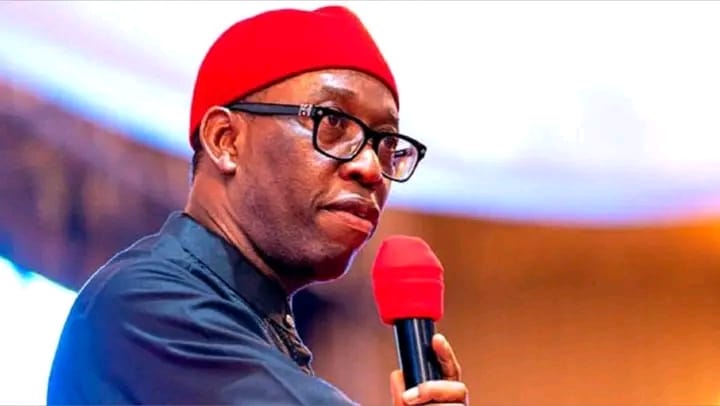
A credible electoral process depends not only on legal eligibility but on public confidence, ethical optics, and the integrity of institutions. In that light, there are strong arguments for why Ifeanyi Okowa should not be cleared to participate in the Delta North APC senatorial primary at this time.
1. The optics and substance of dynastic overlap
The simultaneous candidacies of Ifeanyi Okowa and his daughter, Marylin Daramola Okowa, raise legitimate concerns about political concentration within a single family. While not necessarily illegal, the principle at stake is broader than legality, it is about equitable access to political opportunity and the avoidance of perceived entrenchment of power.
In emerging democracies especially, political legitimacy is fragile. When two closely related individuals seek elective offices concurrently, it risks undermining internal party democracy and can discourage wider participation. Party primaries are meant to be competitive arenas, not extensions of familial political networks. Allowing both candidacies, his daughter running for State assembly and him running for Senate, is a signal of dynastic consolidation rather than merit-based selection.
One of them must step down. In this regard, Okowa needs to step down and allow his daughter to run for the state House of Assembly. Okowa has served his term. He has served in almost all important offices in Nigeria, what else does he want in the National assembly?
2. The burden of unresolved corruption allegations
Equally significant is the reported pending case involving the Economic and Financial Crimes Commission (EFCC)concerning alleged misappropriation of public funds. Allegations of this magnitude, reportedly in the region of ₦1.3 trillion, are not trivial administrative disputes; they strike at the core of public trust. The EFCC is expected to block him from contesting the election until the issues against him are cleared.
Though allegation is not a conviction, the existence of an active investigation or pending legal process introduces a serious reputational and ethical cloud. His image has not bee cleansed to make him fit to run for any political office in the country. Political parties, if they are to be seen as gatekeepers of public accountability, have a responsibility to apply higher standards than mere legal minimums. The allegation against him is a testament to the fact that Okowa has trust issues with public funds, and he must needs purge himself before running for any office.
Clearing a candidate under such scrutiny risks normalizing a “contest now, answer later” culture, which weakens anti-corruption norms. It also exposes the party to reputational damage, especially in a political environment where corruption remains a central voter concern.
ALSO READ: APC Extends Sale, Submission Of Forms For 2027 Elections
3. Institutional credibility and party discipline
Political parties are not just vehicles for contesting elections; they are institutions that signal values. By restricting candidacy in cases where ethical questions are substantial, whether due to familial concentration of power or unresolved legal issues, a party demonstrates seriousness about governance and accountability.
Conversely, overlooking these concerns can erode internal discipline and send mixed signals to both party members and the electorate. It suggests that influence may outweigh prudence, character and ethical considerations.
4. Strategic political risk
From a purely strategic standpoint, fielding a candidate facing unresolved financial allegations sends a signal that political parties do not care about the character of people they present to run for political offices. Opponents will inevitably weaponize such issues during campaigns, potentially shifting focus from policy debates to personal controversies. This can weaken not only the party’s electoral prospects in Delta North.
The question is not simply whether Ifeanyi Okowa can contest, but whether he should, given the current context. The overlap with his daughter’s candidacy contesting for the state House of assembly raises concerns about fairness and political balance, while the pending EFCC matter introduces significant ethical and reputational risks. If APC must maintain its strength in the region, Okowa should not be allowed to contest the election.
A prudent course for the party would be to prioritize institutional integrity and public confidence by withholding clearance until these issues are decisively resolved. In politics, timing and perception matter as much as legality, and in this case, both argue for restraint.








DELSU Announces 2026/2027 Academic Calendar, Fixes Matriculation For November 7

Delta South ADC Ticket: Orette Seeks Legal Vindication, Urges Supporters To Stay Calm, Continues Campaign

PRESS STATEMENT: Omo-Agege Fires Back At Aguariavwodo, Lists Projects, Says Urhobo Will Reject APC In 2027

Oborevwori Orders Immediate Overhaul Of All Dilapidated Public Schools In Delta

APC Plans To Buy PVCs From Delta Voters With Fake Empowerment, Obidient/OK Movement Alleges

UNIDEL VC Urges Nigerians To Support Universities In Their Localities

Bayelsa @30 Spending Claims: Setting The Record Straight On Diri Administration’s 2026 Expenditure

Otefe: Delta State Polytechnic Announces 2026/2027 Post-UTME Screening Dates

Edith Okowa Adopts 50 UNIDEL Students, Pledges Annual N200,000 Support

THE World University Rankings 2027 To Feature Record 2,297 Institutions

Police Arrest One Suspect Over Death Of Delta Education Deputy Director

2nd Term: DELSU Postgraduate Students Purchase Nomination Form For Ivworin

Ughelli North Chairman Calls For Calm Over Death Of Delta Education Deputy Director

National Association Of Proprietors Of Private Schools Announces Activities For 2026 NAPPS Day


-
 News22 hours ago
APC Plans To Buy PVCs From Delta Voters With Fake Empowerment, Obidient/OK Movement Alleges
-
Politics17 hours ago
PRESS STATEMENT: Omo-Agege Fires Back At Aguariavwodo, Lists Projects, Says Urhobo Will Reject APC In 2027
-
News15 hours ago
DELSU Announces 2026/2027 Academic Calendar, Fixes Matriculation For November 7
-
Education17 hours ago
Oborevwori Orders Immediate Overhaul Of All Dilapidated Public Schools In Delta
-
News16 hours ago
Delta South ADC Ticket: Orette Seeks Legal Vindication, Urges Supporters To Stay Calm, Continues Campaign