Feature
Oborevwori’s MORE Agenda, Quietly Dismantling Doubt: Why Delta May Yet Need Him Beyond 2027

By Endurance Ikanone
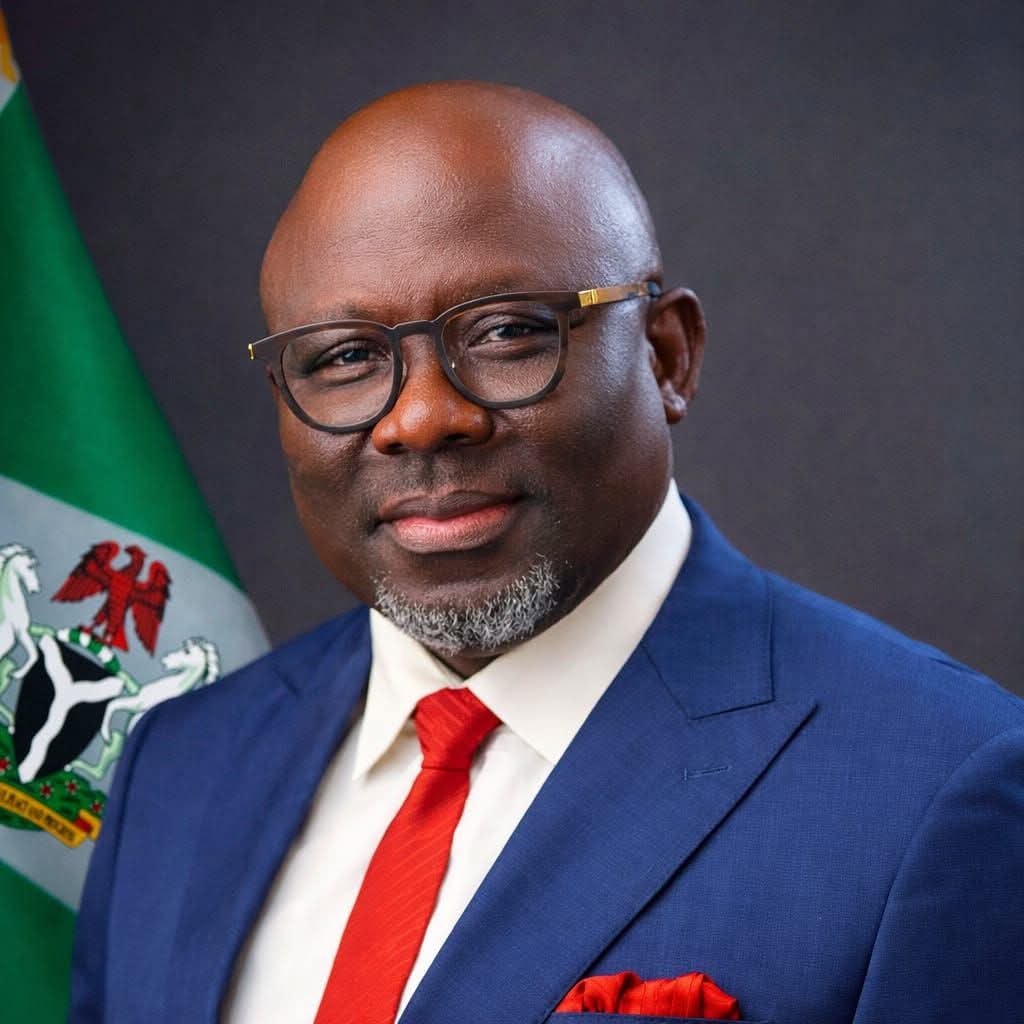
From the very moment Sheriff Oborevwori assumed office as Governor of Delta State, expectations were undeniably high. Yet, beneath that wave of anticipation lay deep skepticism. Many doubted his capacity to lead a complex state like Delta, questioning whether he could match or even surpass the achievements of his predecessor. But as events have unfolded, what has become increasingly clear is that this man called Sheriff is not just governing he is doing things differently, quietly dismantling doubt with deliberate action and measurable results.
What distinguishes his leadership is not loud rhetoric but a steady redefinition of governance. While he inherited a relatively stable system, his approach has introduced a new order marked by fiscal discipline, continuity in project execution, grassroots focused development, and bold administrative reforms. His refusal to rely on borrowing to fund massive infrastructure projects signals a shift toward responsible financial management. At the same time, his insistence on completing inherited projects while initiating new ones reflects a leadership that understands continuity without stagnation. Rooted in grassroots politics, his governance is people centered, evident in the roads, healthcare facilities, and employment opportunities reaching ordinary Deltans. His ongoing screening of civil servants who have overstayed their years of service further demonstrates a willingness to confront systemic inefficiencies and open doors for younger citizens.
Nowhere is this new governance style more visible than in infrastructure development. Perhaps the most iconic projects under his administration are the Warri/Effurun flyovers. The Delta State Executive Council approved a massive ₦78 billion contract for the construction of three major flyovers at PTI Junction, Enerhen Junction, and DSC Roundabout, alongside extensive road expansion works handled by Julius Berger. These projects are not just about easing traffic; they represent a deliberate attempt to modernize the Warri/Uvwie axis, one of the busiest economic corridors in the state. Today, the PTI flyover, Enerhen flyover, and DSC flyover are nearing completion, with significant progress recorded across all sections.
In addition to these, the administration approved another ₦39.3 billion for the construction of the Otovwodo flyover in Ughelli, targeting a long standing traffic bottleneck along the East West Road. There is also the ₦59.7 billion Agbor (Uromi Junction) flyover project in Ika South Local Government Area, designed to reduce accidents and improve connectivity in that axis.
Altogether, these flyovers form a network of strategic interventions that are redefining movement, commerce, and urban life across Delta State.
Beyond the flyovers, Oborevwori’s administration has approved and executed projects worth over ₦230 billion across multiple sectors, reflecting the scale of his development agenda. Roads have been constructed, rehabilitated, and completed across virtually all 25 local government areas. In Sapele Local Government Area, notable projects include the completion of Ituru Road in Elume and several internal road networks aimed at improving access within the town. In Warri and its environs, the reconstruction and dualisation of the Warri Sapele Benin Road from the Spare Parts Market U-turn in Effurun to Ohorhe Junction, stands out as a critical intervention connecting major economic routes.
ALSO READ: Delta Secondary Education Ministry Orders Immediate Submission Of Teachers’ Records
In Ethiope West, the Unoghovo Community Road linking the Benin Expressway to Ovade has been completed, improving access for rural dwellers. In Oshimili South, projects such as Oko Amakom to Oko Obiokpu, Oko Anala, and Oko Obgele roads, alongside flood control works on Summit Road and surrounding areas, have transformed Asaba’s urban landscape. In Ndokwa West, the Emu Obodeti, Abbi, Abraka road project has improved connectivity within the region, while in Patani, the completion of the Bulu Angiama Road has enhanced movement within riverine communities.
In Ukwuani, access roads to the Model Technical College in Obiaruku (Phase II) have been constructed, strengthening educational infrastructure. In Warri South West, internal roads in Jagbala and Kantu communities have been approved and developed, alongside other riverine infrastructure projects. In Ika South, flood control projects linking multiple roads to the Orogodo River have addressed perennial flooding challenges.
Across the state, other notable projects include the Okpanam Ibusa bypass, Upper and Lower Erejuwa roads in Warri, Emevor Orogun road phases, Ughelli Ring Road, Orere Bridge, and the Trans Warri Ode Itsekiri road network. Each of these projects, executed at significant costs running into billions of naira, reflects a government determined to leave no part of the state behind.
Yet, beyond infrastructure, Oborevwori’s impact is also deeply felt in human capital development. His immediate employment of primary school teachers upon assumption of office addressed a long standing shortage in the education sector. This bold step not only improved learning conditions but also reduced unemployment among qualified graduates.
Complementing this is the ongoing screening of civil servants who have exceeded retirement age. This reform is gradually freeing up positions within the public service, allowing younger Deltans to gain employment and contribute to governance.
Healthcare has equally received attention, particularly through the renovation and upgrading of primary healthcare centres across the state.
These facilities, now better equipped and more accessible, are improving healthcare delivery at the grassroots level, reducing the burden on major hospitals and bringing medical services closer to the people.
Security has not been left out. The administration’s plan to construct new police stations across all 25 local government areas represents a proactive approach to strengthening security architecture. By bringing policing closer to communities, the government aims to improve response times, enhance safety, and build trust between citizens and security agencies.
In the education sector, the establishment and upgrading of tertiary institutions across the state signal a commitment to long term development. The state’s investment in universities and higher education is aimed at equipping young people with the skills needed for a competitive economy, ensuring that Delta remains not just a resource rich state, but a knowledge driven one.
However, even as these achievements continue to unfold, there remain communities whose needs demand urgent attention.
One such area is the Esaba community, where the lack of adequate road infrastructure continues to affect daily life and economic activity. For the people of Esaba, access roads are not a luxury, they are a necessity that determines mobility, trade, and overall quality of life.
Addressing this need would not only improve living conditions but also stand as a powerful symbol of inclusive governance.
If Oborevwori extends his infrastructure drive to Esaba and similar underserved communities, it would further cement his legacy as a governor who left no one behind. More importantly, it would write his name in gold, not just in political records, but in the hearts of the people. For the Esaba community, such an intervention would be remembered for generations as a turning point in their history.
What makes Oborevwori’s leadership particularly compelling is the balance he has achieved between ambition and restraint.
Massive projects are being executed, yet the state is not sinking into debt. Communities are being developed, yet the focus remains on sustainability. Institutions are being reformed, yet the human impact remains central.
From the bustling streets of Warri to the growing capital city of Asaba, from the riverine communities to inland towns, the imprint of his administration is becoming increasingly visible. Roads are opening up previously inaccessible areas, flyovers are transforming urban mobility, schools are gaining teachers, healthcare centres are coming back to life, and opportunities are gradually expanding for the people.
In the end, governance is measured not by promises but by impact. In less than a full term, Sheriff Oborevwori has moved from a position of doubt to one of visible delivery. His administration, defined by quiet efficiency and strategic execution, is gradually reshaping Delta State.
As 2027 approaches, the question is no longer whether he can deliver, it is whether the momentum he has built should be sustained. For many Deltans and beneficiaries of his policies, the answer may lie in the roads they now travel, the jobs they have secured, the healthcare they can access, and the hope that development will continue.
And perhaps, in places like Esaba, the future still waits offering him the opportunity to complete a story that is already being written across Delta State.









2027: Deltans, Not Traditional Rulers, Will Choose Next Governor — Iyovwaye

2027: Oborevwori Has No Challenger In Delta — APC Chieftain

2027: APC Will Sweep Ughelli North, Says Jaro Egbo

2027: “Ebizi Brown Has Done Well, Deserves Re-Election” — Media Team

Soludo Celebrates Awka Catholic Bishop Ezeokafor At 74

Godwin Ikuru Makes Final List As SDP Senatorial Candidate For Delta Central

Success Life Model School Clocks 4, Holds Thanksgiving Sunday

Five Years Of Royal Renaissance: Delta Bureau Celebrates Ogiame Atuwatse III, Visionary Father Of The Itsekiri Nation

2026: Delta Releases JSS 3 Results As 85,049 Candidates Pass

SSANU/NASU Delta State Council Urges Calm As Members Await Implementation Of New Salary Agreement By DTSG

Ukwuani: Chief Fredrick Ezenwiwe Declared Missing After Going To Farm

NDC Accuses INEC Of Replacing Party Candidates With ‘Strange Names’

DELSU Ends Sales Of 2026 Post-UTME Screening Form

Governor Soludo Calls Marriage A Sacred Covenant, Urges Reorientation Of Nigerian Youths


-
 News7 hours ago
2027: APC Will Sweep Ughelli North, Says Jaro Egbo
-
News11 hours ago
Soludo Celebrates Awka Catholic Bishop Ezeokafor At 74
-
News7 hours ago
2027: “Ebizi Brown Has Done Well, Deserves Re-Election” — Media Team
-
News6 hours ago
2027: Oborevwori Has No Challenger In Delta — APC Chieftain
-
News5 hours ago
2027: Deltans, Not Traditional Rulers, Will Choose Next Governor — Iyovwaye