
News
From Labs To Life: NAAIP Unveils Blueprint To AI-Proof Nigeria’s Education, Workforce

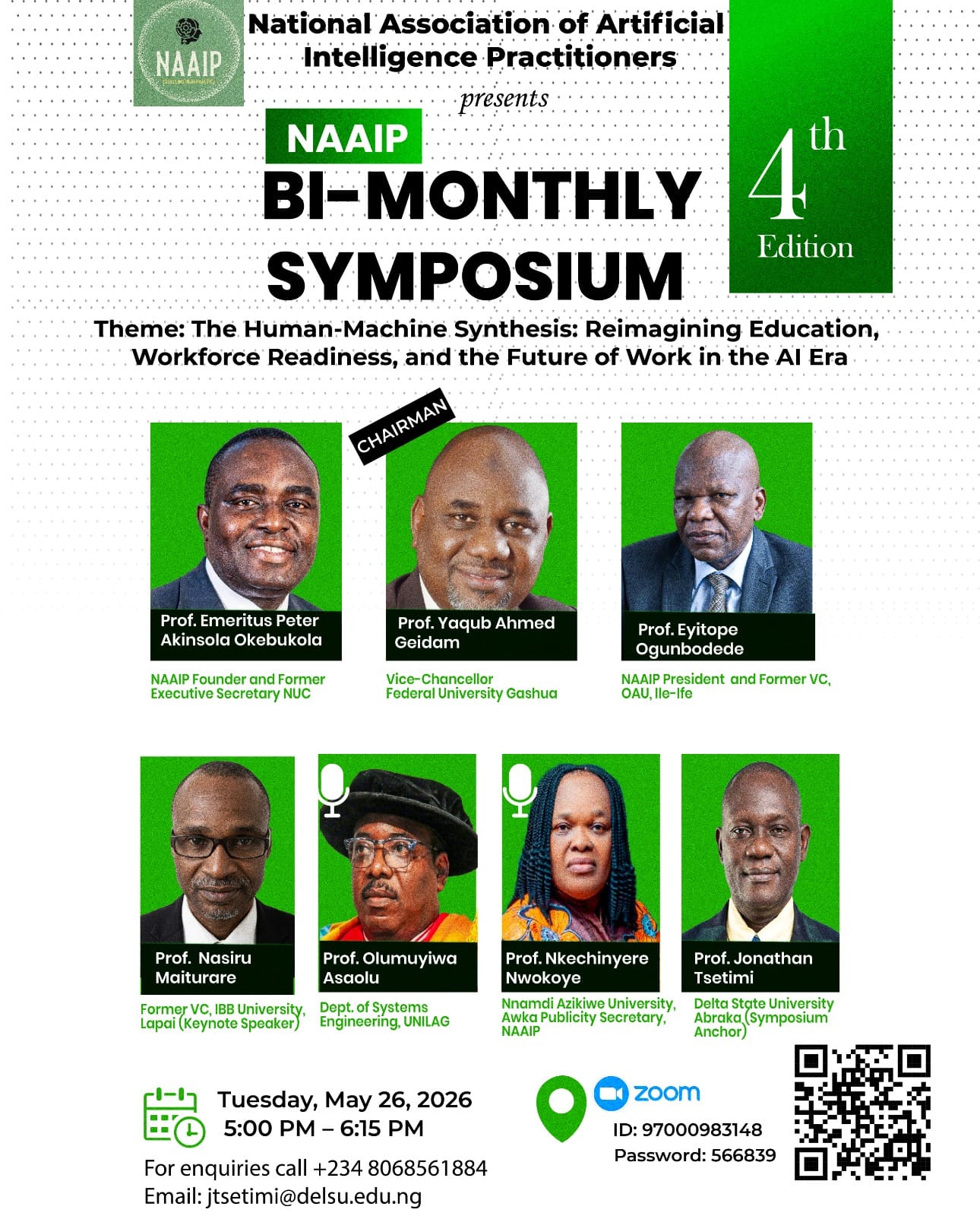
The National Association of Artificial Intelligence Practitioners (NAAIP) has unveiled a comprehensive framework aimed at repositioning Nigeria’s education sector and workforce for the rapidly evolving artificial intelligence era.
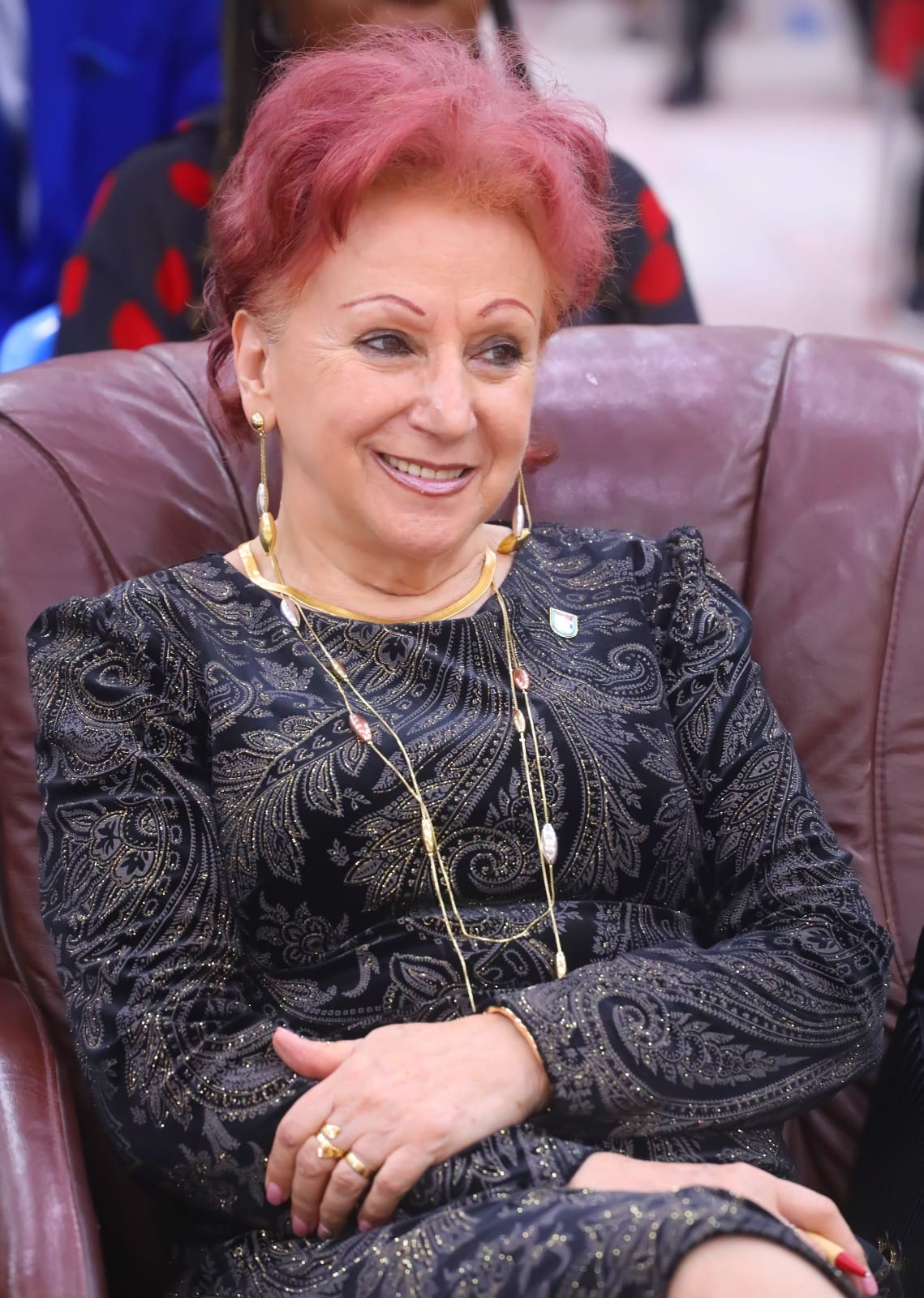
Professor Elisabeta Smaranda-Olarinde, Vice-Chancellor, Afe Babalola University, Ado-Ekiti (ABUAD) Keynote Speaker
The blueprint was presented during the 4th edition of the association’s flagship Bi-Monthly Symposium held virtually on Tuesday, May 26, 2026, under the theme: “The Human-Machine Synthesis: Reimagining Education, Workforce Readiness, and the Future of Work in the AI Era.”
The high-level symposium brought together university administrators, scholars, policymakers, researchers, and AI professionals from across the globe to deliberate on strategies for aligning Nigeria’s educational and workforce systems with emerging technological realities.
The event focused heavily on the “Talent Development” pillar of Nigeria’s National AI Strategy (NAIS), with participants outlining institutional reforms, curriculum restructuring, ethical AI governance, and workforce upskilling initiatives necessary for Nigeria to emerge as a continental leader in artificial intelligence.

Prof. Yaqub Ahmed Geidam, Vice-Chancellor, Federal University Gashua
In his opening remarks, NAAIP President, Eyitope Ogunbodede, stressed that artificial intelligence is no longer a futuristic concept but a present-day reality comparable to the Industrial Revolution.
He urged practitioners and institutions to adopt a human-centered and ethical approach to AI deployment in order to preserve human dignity and authentic relationships.
The Chairman of the occasion and Vice-Chancellor of the Federal University, Gashua, Yaqup Ahmed Geidam, highlighted the growing intersection between human capability and emerging technologies.
Geidam noted that society had moved beyond debating whether AI would transform the world, stressing that the real challenge now lies in ensuring educational systems evolve from rote memorization to adaptability, innovation, and critical thinking.
He also credited the founder of NAAIP, Peter Akinsola Okebukola, for laying strong foundations in higher education development, particularly through strategic planning models introduced under the Virtual Institute for Higher Education Pedagogy (VIHEP).
Professor Okebukola, in his goodwill message, challenged participants to view artificial intelligence as an urgent catalyst for educational transformation rather than a distant technological trend.
The academic coordination of the symposium was led by Jonathan Tsetimi, Vice-President South-South of NAAIP and Coordinator of Alumni Matters at Delta State University (DELSU), Abraka.
Tsetimi explained that the symposium was deliberately designed to align with the talent development objectives of Nigeria’s National AI Strategy by safely transitioning AI innovations “from labs to life.”
He subsequently introduced the keynote speaker, Elisabeta Smaranda-Olarinde, Vice-Chancellor of Afe Babalola University, Ado-Ekiti (ABUAD), who delivered a keynote address titled, “The Pedagogy of the Future: Aligning Education with AI Evolution.”
In her presentation, Smaranda-Olarinde described AI as a present reality already reshaping classroom teaching, academic administration, and institutional management.
“The real question is whether our institutions will respond with fear, confusion, careless excitement, or thoughtful leadership,” she stated, adding that AI should strengthen the human purpose of education rather than replace it.
Drawing from practical experiences at ABUAD, she revealed that the institution had already introduced mandatory AI pedagogy workshops for lecturers and British Council-supported AI training for administrative staff to improve institutional efficiency and service delivery.
She also advocated stronger institutional policies to address issues such as plagiarism, data privacy, and ethical AI use while promoting cross-disciplinary AI literacy across fields including agriculture, finance, medicine, and the humanities.
The symposium also featured technical presentations focused on workforce development and translational AI research.
Professor Olumuyiwa S. Asaolu of the University of Lagos examined the implications of AI for Corporate Nigeria, emphasizing that AI would largely redesign existing job functions rather than trigger widespread job losses.
He urged organizations to conduct AI capability audits and encouraged professionals and students to embrace continuous digital upskilling, noting projections that nearly 40 percent of Nigerian jobs would require core digital competencies within the next five years.
Another presentation was delivered by Nkechinyere Anthonia Nwokoye of Nnamdi Azikiwe University, Awka, who highlighted the importance of translational research capable of moving AI models from laboratory environments into practical solutions in healthcare, agriculture, and financial technology.
Nwokoye further emphasized the need for diverse research collaborations and digital mapping systems to track both local and global AI research hubs.
ALSO READ: NDC Welcomes Omo-Agege, Ochei, Grants Waivers For Senatorial Primaries
The symposium concluded with an interactive panel session moderated by Professor Tsetimi, during which participants extensively discussed academic integrity, indigenous language AI models, digital inclusion, and infrastructural gaps affecting rural institutions.
Participants also referenced recent global discussions on digital governance, including policy concerns raised by Pope Leo XIV in his encyclical, Magnificent Humanus, which cautioned against the misuse of intelligent machines in ways that could diminish human dignity and authentic human interaction.
A major concern raised during the discussions was the widening gap between technologically advanced urban institutions and under-resourced rural schools.
Participants stressed that restricting AI-driven educational tools to elite institutions would deepen societal inequality, insisting that future AI-driven educational reforms must deliberately accommodate public schools, underserved communities, and adult learners.
At the end of the symposium, stakeholders adopted a seven-point communiqué calling for urgent institutional AI policies, cross-disciplinary AI integration, continuous staff upskilling, proactive corporate AI audits, lifelong learning initiatives, translational AI research funding, and stronger efforts to close digital infrastructure gaps across rural communities.
The communiqué was jointly signed by Professor Ogunbodede and Professor Tsetimi.
The event ended with closing remarks by Professor Geidam, who commended NAAIP for sustaining national conversations on critical technological issues through its bi-monthly symposium series, while the vote of thanks was delivered by Khadijat Adenola Yahaya of the University of Ilorin.
For further information, NAAIP directed interested stakeholders to its official website, [National Association of Artificial Intelligence Practitioners](https://na-ai-p.org


Ochonogor, Okorodudu Inspect Ongoing Construction Of Administrative Block At COE Warri

2026: DESOPADEC Launches Bursary Website

Hon. Ebizi Extols Ogidiga On His Birthday

Ukwuani: Chief Fredrick Ezenwiwe Declared Missing After Going To Farm

Oborevwori Moves To Boost Deltans’ Purchasing Power Amid Economic Hardship

Presidency: Tinubu’s US Court Case Concerns Records, Not Criminal Liability

Godswill Smitho Fuel Station Transitions To MRS Outlet, Offers Lower Prices Direct From Dangote Refinery

Five Years Of Royal Renaissance: Delta Bureau Celebrates Ogiame Atuwatse III, Visionary Father Of The Itsekiri Nation

SSANU/NASU Delta State Council Urges Calm As Members Await Implementation Of New Salary Agreement By DTSG

DELSU Provost, Atonuje, Gives Daughter Out In Marriage

FUPRE Opens Supplementary Post-UTME Screening For 2026/2027 Admission

Sex-For-Grades: DOU Probes Lecturer Filmed Dancing After Hotel Sting

Institute Of Education: DELSU Announces 2026/2027 Admission Into Diploma Programmes

DELSU Holds 121st Inaugural Lecture, As VC Hails Atonuje’s Impact As Mathematical Scientist


-
 News13 hours ago
Ukwuani: Chief Fredrick Ezenwiwe Declared Missing After Going To Farm
-
News15 hours ago
Godswill Smitho Fuel Station Transitions To MRS Outlet, Offers Lower Prices Direct From Dangote Refinery
-
News14 hours ago
Oborevwori Moves To Boost Deltans’ Purchasing Power Amid Economic Hardship
-
Education23 hours ago
DELSU Introduces Online Clearance For Graduating Students
-
Crime22 hours ago
New Delta CP Warns Against Sale, Intake Of Illicit Drugs, As Police Arrest Six In Agbor